


- What Is React Native AI?
- Why Use AI in React Native Apps?
- Popular Use Cases of React Native with AI
- React Native AI Architecture (High-Level)
- Best AI Libraries for React Native
- On-Device AI vs Cloud AI in React Native
- Challenges of AI in React Native Development
- Best Practices for Building React Native AI Apps
- Future of React Native AI Development
- React Native AI: Start-to-End Coding Guide for Developers
- React Native + AI Developer FAQs
- Final Thoughts
Ready to transform your vision into reality?
Get Started

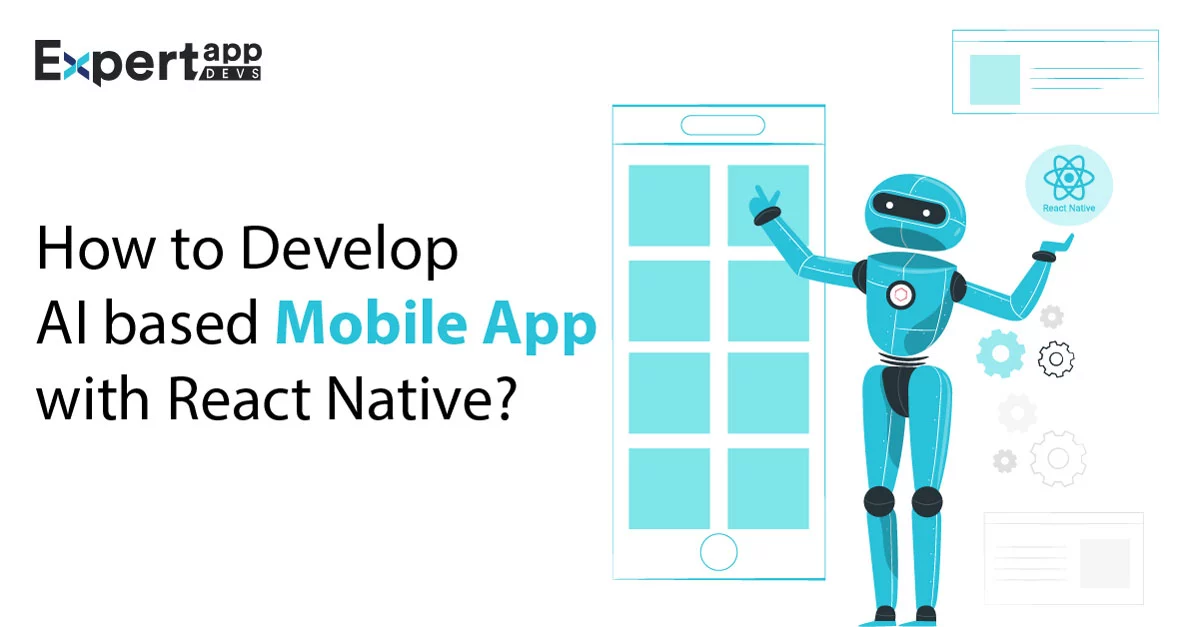
React Native AI: A Complete Guide to Building Intelligent Mobile Apps
 161
161
 0
12 Feb 2021
Min Read
0
12 Feb 2021
Min Read


 Share
Share

 Download PDF
Artificial Intelligence is no longer optional in modern mobile applications. From personalized recommendations to image recognition and conversational interfaces, AI has become a core expectation. React Native AI development allows businesses to build intelligent, cross-platform mobile apps faster and more efficiently.
In this guide, we explore how to integrate AI in React Native, key tools and libraries, real-world use cases, and best practices to build scalable AI-powered mobile apps.
What Is React Native AI?
React Native AI refers to integrating Artificial Intelligence or Machine Learning capabilities into React Native mobile applications. These capabilities may include:
-
Image and facial recognition
-
Natural Language Processing (NLP)
-
Recommendation systems
-
Predictive analytics
-
Voice assistants
-
Chatbots
React Native provides the UI layer, while AI models can run:
-
On-device (using TensorFlow Lite or Core ML)
-
On the server (via Python/AI APIs)
-
Hybrid (cloud inference + local processing)
This approach enables a single codebase for iOS and Android while delivering intelligent features.

Why Use AI in React Native Apps?
Based on industry use cases and performance data, AI in React Native apps delivers measurable advantages:
1. Personalized User Experience
AI analyzes user behavior, preferences, and interactions to deliver tailored content, recommendations, and workflows—boosting engagement and retention.
2. Automation and Efficiency
Machine learning automates repetitive tasks such as data categorization, content moderation, and customer support.
3. Higher Engagement and Conversion
Apps using AI-driven recommendations and predictive insights consistently show improved CTRs, session duration, and conversions.
4. Faster Cross-Platform Development
React Native enables AI features to be deployed across platforms without rebuilding logic separately for iOS and Android.
Popular Use Cases of React Native with AI
1. AI-Powered E-Commerce Apps
AI analyzes browsing and purchase history to:
-
Recommend products
-
Predict buying intent
-
Personalize offers
2. Image Recognition & Computer Vision
Using deep learning models, React Native apps can:
-
Identify objects in images
-
Perform facial recognition
-
Scan documents or receipts
3. Chatbots & Virtual Assistants
AI chatbots powered by NLP improve:
-
Customer support
-
Lead qualification
-
User onboarding
4. Voice-Enabled Applications
Speech recognition allows hands-free interaction, similar to Alexa, Siri, or Google Assistant.
5. Predictive Analytics Apps
AI predicts trends, outcomes, or behaviors using historical data—ideal for fintech, health, and logistics apps.
React Native AI Architecture (High-Level)
A typical React Native AI integration follows these steps:
-
Data Collection – Images, text, audio, or user activity
-
Model Selection – Pre-trained or custom ML model
-
Model Training – Usually done in Python
-
Model Deployment – Cloud or on-device
-
React Native Integration – Using native bridges or JS libraries
-
Inference & UI Rendering – Display AI results in the app
Best AI Libraries for React Native
Based on real-world usage and performance:
TensorFlow & TensorFlow.js
-
@tensorflow/tfjs-react-native -
Ideal for image classification, prediction, and deep learning
Apple Core ML
-
Best for iOS-optimized AI models
-
Can be integrated via native modules
Caffe2 / PyTorch Mobile
-
Efficient mobile inference
-
Suitable for performance-critical AI tasks
NLP & AI APIs
-
OpenAI, Google ML Kit, AWS AI services
-
Ideal for chatbots, text analysis, and speech processing
On-Device AI vs Cloud AI in React Native
| Feature | On-Device AI | Cloud AI |
|---|---|---|
| Performance | Fast, offline | Network dependent |
| Privacy | High | Depends on API |
| Model Size | Limited | Scalable |
| Use Case | Image recognition, sensors | NLP, analytics |
Best practice: Use a hybrid approach for optimal performance and scalability.
Challenges of AI in React Native Development
1. Model Size & Performance
Deep learning models can be large and computationally expensive. Optimization is essential.
2. Data Quality
AI accuracy depends entirely on clean, well-structured data.
3. Native Integration Complexity
Some AI frameworks require native configuration for iOS and Android.
4. Scalability
As user data grows, AI models must scale without degrading performance.
Best Practices for Building React Native AI Apps
-
Use pre-trained models whenever possible
-
Train models in Python, deploy via APIs or mobile frameworks
-
Optimize models for mobile inference
-
Keep AI features user-centric, not intrusive
-
Remove unnecessary features to improve app performance
-
Use dictionaries and structured data for faster inference
-
Consider low-code AI tools for rapid prototyping
Future of React Native AI Development
AI-powered mobile apps will soon be the default, not the exception. React Native’s ecosystem is rapidly evolving, making AI integration more accessible, scalable, and performant.
From machine learning in React Native to deep learning-powered mobile apps, businesses that adopt AI early gain a long-term competitive advantage.
React Native AI: Start-to-End Coding Guide for Developers
This guide walks through building a real AI feature in a React Native app — from setup to deployment using on-device AI + optional cloud AI.
We’ll implement an AI Image Classification feature (easily adaptable to NLP, chatbots, or prediction).
1. Prerequisites
Required Skills
-
JavaScript / TypeScript
-
Basic React Native
-
Basic Python (for AI models)
Tools
-
Node.js ≥ 18
-
React Native CLI (preferred for AI apps)
-
Android Studio / Xcode
-
Python ≥ 3.10
-
Yarn or npm
2. Create React Native Project
npx react-native init ReactNativeAIApp
cd ReactNativeAIApp
Run the app:
npx react-native run-android
# or
npx react-native run-ios
3. Install AI Dependencies (On-Device AI)
TensorFlow for React Native
yarn add @tensorflow/tfjs
yarn add @tensorflow/tfjs-react-native
yarn add expo-gl expo-file-system
(React Native CLI users still use Expo packages for TFJS bindings.)
4. Initialize TensorFlow in React Native
Create src/ai/tensorflow.ts:
import * as tf from '@tensorflow/tfjs';
import '@tensorflow/tfjs-react-native';

export async function loadTensorFlow() {
  await tf.ready();
  console.log('TensorFlow is ready');
}
Call it in App.tsx:
useEffect(() => {
  loadTensorFlow();
}, []);
5. Load a Pretrained AI Model
Option A: Use MobileNet (Recommended)
yarn add @tensorflow-models/mobilenet
Create src/ai/model.ts:
import * as mobilenet from '@tensorflow-models/mobilenet';

let model: mobilenet.MobileNet;

export async function loadModel() {
  model = await mobilenet.load();
  return model;
}

export function getModel() {
  return model;
}
6. Image Picker Integration
yarn add react-native-image-picker
Example usage:
import { launchImageLibrary } from 'react-native-image-picker';

launchImageLibrary({ mediaType: 'photo' }, response => {
  if (!response.didCancel && response.assets) {
    const imageUri = response.assets[0].uri;
  }
});
7. Run AI Inference on Image
import * as tf from '@tensorflow/tfjs';
import { decodeJpeg } from '@tensorflow/tfjs-react-native';

async function classifyImage(imageBuffer) {
  const imageTensor = decodeJpeg(imageBuffer);
  const predictions = await model.classify(imageTensor);
  return predictions;
}
Prediction output:
[
  { "className": "cat", "probability": 0.92 }
]
8. Display AI Results in UI
<Text>
  Prediction: {result[0].className}
</Text>
<Text>
  Confidence: {(result[0].probability * 100).toFixed(2)}%
</Text>
9. Optional: Cloud AI (Hybrid Architecture)
For chatbots, NLP, or generative AI, use cloud APIs.
Example: Call AI API
fetch('https://api.your-ai-server.com/predict', {
  method: 'POST',
  headers: { 'Content-Type': 'application/json' },
  body: JSON.stringify({ input: userData }),
});
Best practice:
-
On-device AI → real-time tasks
-
Cloud AI → heavy reasoning & generation
10. AI Model Training (Python Side)
import tensorflow as tf

model = tf.keras.Sequential([
  tf.keras.layers.Dense(128, activation='relu'),
  tf.keras.layers.Dense(10, activation='softmax')
])

model.compile(optimizer='adam', loss='categorical_crossentropy')
model.fit(x_train, y_train, epochs=10)
Convert for mobile:
tflite_convert --saved_model_dir=model --output_file=model.tflite
11. Performance Optimization (Critical in 2026)
-
Use quantized models
-
Lazy-load AI models
-
Run inference in background threads
-
Cache results locally
-
Avoid large synchronous bridge calls
12. Security & Privacy
-
Prefer on-device AI for sensitive data
-
Encrypt API traffic
-
Never ship raw training data
-
Use environment variables for AI keys
13. Testing AI in React Native
-
Unit test model loading
-
Validate prediction accuracy
-
Test on low-end devices
-
Measure memory & battery usage
14. Deployment Checklist
✅ AI models optimized
✅ Fallback for failed inference
✅ Offline support
✅ Logging & monitoring
✅ Model versioning
15. Production Architecture (Recommended)
React Native UI
   ↓
On-Device AI (TFLite / Core ML)
   ↓
Cloud AI (NLP / GenAI APIs)
   ↓
Secure Backend (Python / Node)
In 2026, React Native AI apps are:
-
Hybrid (device + cloud)
-
Privacy-aware
-
Performance-optimized
-
AI-first by design
React Native remains a top choice for AI-powered mobile apps when built correctly.
React Native + AI Developer FAQs
1. What is React Native AI development in 2026?
React Native AI development in 2026 refers to building cross-platform mobile apps using React Native while integrating advanced AI capabilities such as on-device machine learning, real-time inference, multimodal AI, and personalized user intelligence using modern AI frameworks.
2. Can AI models run fully on-device in React Native apps?
Yes. In 2026, most React Native AI apps support fully on-device inference using optimized frameworks like TensorFlow Lite, Core ML, and ONNX. On-device AI improves performance, privacy, offline access, and battery efficiency.
3. Which AI libraries are best for React Native developers in 2026?
Popular AI libraries for React Native in 2026 include:
-
TensorFlow Lite & TensorFlow.js
-
Apple Core ML
-
ONNX Runtime Mobile
-
OpenAI & multimodal AI APIs
-
Google ML Kit
Developers often combine on-device models with cloud APIs for hybrid AI workflows.
4. Is React Native suitable for production-grade AI apps?
Yes. React Native is widely used for production-grade AI apps in fintech, healthcare, e-commerce, and SaaS. With proper model optimization and native bridging, React Native delivers high-performance AI features comparable to native apps.
5. How do developers integrate machine learning models into React Native?
Machine learning models are typically:
-
Trained in Python
-
Converted to mobile formats (TFLite, Core ML, ONNX)
-
Loaded into React Native via native modules or AI libraries
-
Used for real-time inference inside the app UI
This approach ensures scalability and maintainability.
6. What is the difference between cloud AI and on-device AI in React Native?
-
On-device AI offers low latency, privacy, and offline usage
-
Cloud AI provides larger models, NLP, and multimodal intelligence
In 2026, most apps use a hybrid AI architecture combining both approaches.
7. How secure is AI data in React Native applications?
AI data security in React Native depends on architecture. On-device inference minimizes data exposure, while cloud-based AI requires encryption, secure APIs, and compliance with data protection regulations like GDPR and HIPAA.
8. Can React Native apps use generative AI features?
Yes. React Native apps in 2026 commonly integrate generative AI for:
-
Chatbots and copilots
-
Content generation
-
Code suggestions
-
Voice and text assistants
These features are usually powered by AI APIs combined with local caching.
9. What performance challenges exist when using AI in React Native?
Common challenges include:
-
Large model sizes
-
Memory consumption
-
Battery usage
-
Native bridge overhead
Developers mitigate these issues using quantized models, background processing, and platform-specific optimizations.
10. Is Python still required for React Native AI development?
Yes. While React Native handles UI and app logic, Python remains essential for training, fine-tuning, and validating AI models before deploying them to mobile environments.
11. How does AI improve user experience in React Native apps?
AI enables:
-
Personalized recommendations
-
Predictive search and navigation
-
Intelligent automation
-
Context-aware interfaces
These enhancements significantly increase engagement and retention.
12. What industries benefit most from React Native AI apps?
Industries leading AI adoption in React Native include:
-
E-commerce
-
Healthcare
-
Fintech
-
Education
-
Logistics
-
Fitness & wellness
Each uses AI for personalization, automation, and predictive insights.
13. Can React Native AI apps work offline?
Yes. Apps using on-device AI models can function fully offline, including image recognition, text classification, and sensor-based predictions.
14. Is React Native future-proof for AI development beyond 2026?
React Native remains future-proof due to:
-
Strong community support
-
Continuous framework evolution
-
Compatibility with modern AI toolchains
-
Cross-platform scalability
It is expected to remain a leading choice for AI-driven mobile apps.
15. What is the recommended AI architecture for React Native in 2026?
The recommended architecture is:
-
React Native UI layer
-
On-device AI for real-time tasks
-
Cloud AI for complex intelligence
-
Secure APIs and data pipelines
-
Modular AI components for scalability
Final Thoughts
React Native AI development enables businesses to build intelligent, scalable, and high-performance mobile apps faster than ever before. By combining React Native’s cross-platform efficiency with modern AI tools, you can deliver smarter user experiences and measurable business growth.
If you’re planning to build a React Native app with AI, now is the right time.



 0
0

 0
0


 0
0
0
0
 0
0
0
0
 0
0
0
0