



React Native App Development Services
Why build two apps when one codebase does it all? Our React native experts create highly functional cross-platform apps, giving you a pure native experience across all devices and domains.


Years in Business

Team Strength

Repeat Business

Ontime Delivery
From Code to Wow: The Tools We Trust for React Native Magic!
Using react native can help you save 40% of your development time and launch the react native solutions faster in the market. Using the right technology stack makes all the difference in the entire development phase. As React native experts, we only use the advanced React native technology stack to create breathtaking mobile apps.


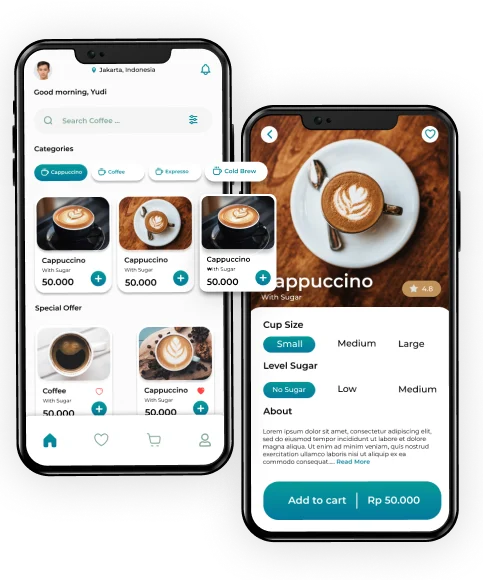
Achieve Infinite Possibilities with Fully Custom Apps
React native ranks at 2nd most popular framework when it's about developing highly efficient cross-platform apps. If you are still using off-the-shelf mobile apps and facing issues like higher development costs and poor user experience, a custom React native app can help to solve the majority of business problems.
Hire React native developer from Expert App Devs to develop feature-rich mobile apps tailored to your goals, industry, and users. From consulting and design to development, our react native team handles it all. We can create a custom-made React native app tailored to your business goals and user preferences to achieve maximum ROI and more love from users.
Explore Our React Native Development Portfolio
Till now, we have delivered over 2500 plus apps, and every app tells a story! Our portfolio shows how our React native app development service has helped startups and global enterprises achieve their business goals.
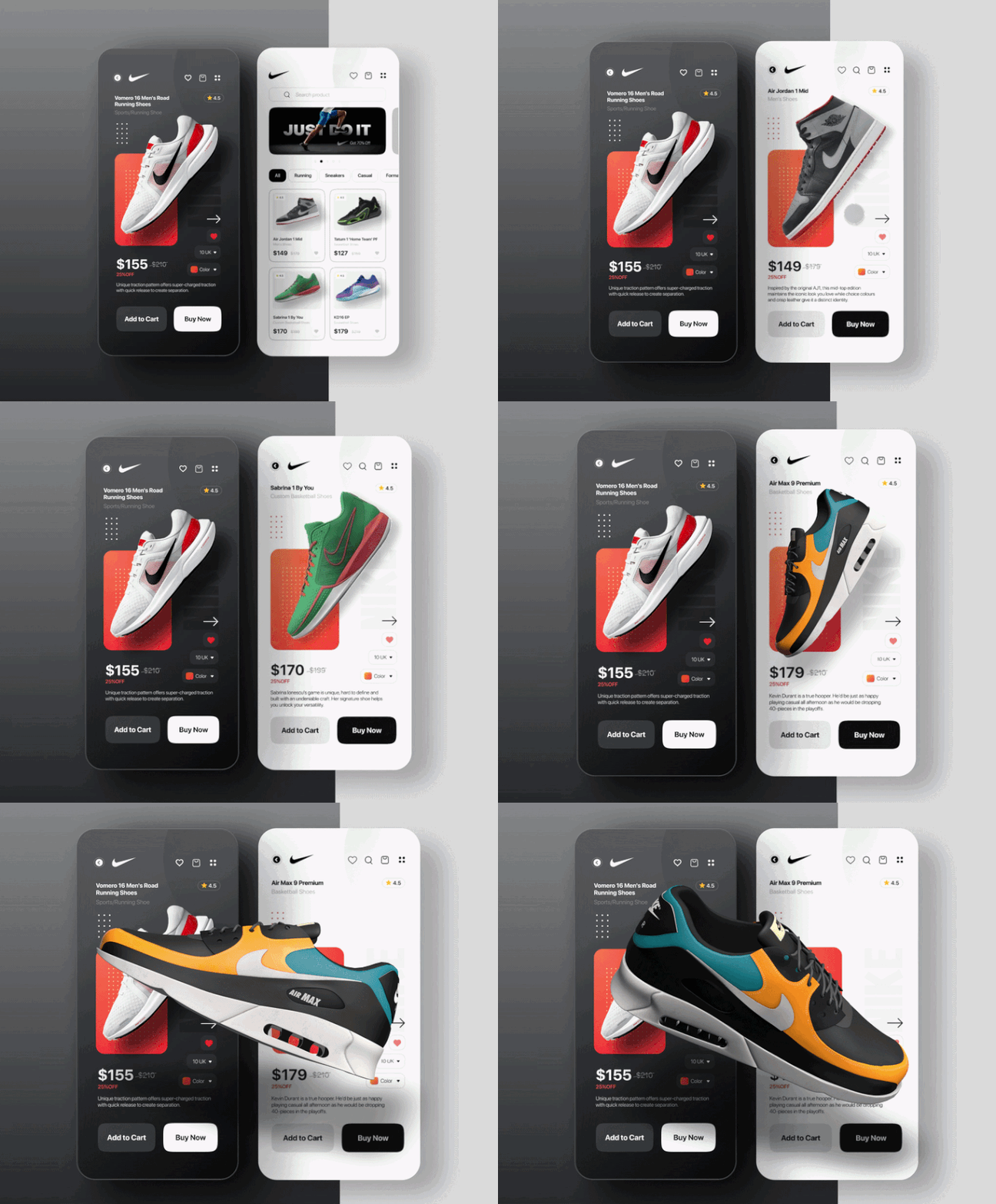
Why Choose Expert App Devs As Your Ideal React Native Development Company?
Why Choose Expert App Devs for your Project Development
Being an experienced React native development company, we have been the first choice of many big brands because we help every business idea come true with our outstanding technical skills and React proficiency.

We follow the agile method and make the best use of code-reusability for faster app delivery.

Our developers follow secure coding techniques, encryption, secure storage, and protocols to ensure top security.

No information is hidden. You can always access the code or check the progress of the project through the collaboration tool.

We adapt easily! Our team is flexible when it comes to working with hours, coding methods, or any new technologies.

We choose technologies and tools according to user requirements and experience in mind.

Our team analyzes the React development from every angle to align with the end goals.

We use modern technologies like ML/AI, IoT, cloud, metaverse, AR/VR, and more to future-proof the app.

Our app development starts with deep research and a wise choice of tools and frameworks for a reliable and high-quality result.
React Native gives you the power of native apps with the flexibility of cross-platform development. Lower costs, faster updates, and unbeatable performance what’s not to love?

Mobile app prototype screens with layered UI cards

User journey flow with connected arrows and touchpoints

Design system component grid with buttons and cards

Wireframe tablet screen with editable layout blocks

Cursor interaction on draggable UI elements

Figma-style collaborative design workspace
Strategic Design
A great experience starts with great designs. That's why we focus on creating user-centric designs by researching human psychology, colors, and other features to build an interactive experience over the app. We brainstorm ideas and understand the execution of each component and feature to develop a functional wireframe and prototype that works well on all devices. Our entire design process is focused on and executed by prioritizing engagement, retention and conversions for your business.

Agile sprint board connected to app screens

API integration dashboard with connected nodes

Cross-platform mobile coding on multiple devices

Full-stack development workstation with dual monitors

Multi-screen React Native code editor setup

Terminal window with live deployment commands
Agile Development
This is where we create an optimal react native environment to bring life to your app idea. Our React developers write clean app code by using best practices, integrating necessary APIs and databases, and implementing suitable business logic. Keeping app scalability and budget in mind, we create a checklist of important features, logics, and algorithms to create a static template for testing. We use an agile approach on the entire development and iterate accordingly until it looks user-centric and expected.

Analytics dashboard with performance graphs

App speed and optimization monitoring charts

Automated testing workflow with pipeline arrows

Device compatibility matrix across phones and tablets

Mobile app testing on multiple screen sizes

QA bug tracking panel with issue indicators
Quality Testing
We never launch with glitches! Our quality assurance team follows a rigorous testing process- automated and manual to identify the bugs if any. From functional and UI testing to security and performance checks, we deliver a rock-solid, error-free app ready for real-world use.

Continuous support and maintenance operations center

Mobile app lifecycle management workflow

Performance optimization speed meter illustration

Real-time app monitoring dashboard with charts

Security shield with cloud backup synchronization

Server maintenance with update and sync arrows
Continuous Maintenance
We believe app development is a continuous and long journey. Our responsibility does not end with the app delivery. Technology continuously evolves, and hence, your app should, be. Our React developers team monitors your app from time to time and is available for maintenance services in case you need feature enhancement, upgrade, optimization or to face any bug issues in the future.

Business strategy meeting with analytics charts

Client and developer collaboration discussion

Digital transformation workflow illustration

Enterprise mobile solution planning session

Growth strategy dashboard with upward arrows

Technology roadmap presentation on digital board
Expert Consulting
If you are not confident whether react native is the best choice to build your business app, our react native consulting service will solve all your doubts related to app development. We analyze your needs, suggest the best tech approach and ensure you get an optimized, cost-effective solution tailored to your goals.
Our Projects Our Projects Digital Excellence Through Expert Engineering.






















React Native: A Comprehensive Guide for Developers & Businesses
Brief into React native technology
React native is a popular and open-source mobile app development framework created by Meta(previously Facebook). It is the 2nd most used platform for cross-platform mobile app development. Statista report says that React owns over 32 % of the global market share. If we look at the 2025 research or statistics, there are over 2 million websites globally, and among those, 1.3 million websites are built using React design.
React native is the preferable choice of many developers due to many reasons. It comes with pre-built libraries, components, reference materials and more. Plus, the biggest benefit is code reusability, which solves many business problems like budget issues, high performance, development time, and much more.
So, how did react native come into the market? Let's read history and how it evolved and became a popular framework over time.
History and its evolution over time
Only a few people know that react native was Facebook’s first internal hackathon project. It was somewhere between 2013. Previously, Facebook used to use HTML5 and other browser technologies, but they were slow and caused performance issues. Jordan Walke, a Facebook engineer discovered that they could use JavaScript to interact with native elements for iOS.
To test the effectiveness of JavaScript, Facebook organized an internal hackathon where they created a prototype of native apps using JavaScript. In 2015, react native was launched in January 2015 in the React conference.
In March 2015, it was released as an open-source framework, and users can access it on GitHub and online platforms. In a very short time, react native gained popularity and good response. The world’s biggest brands, like Instagram, Skype, Walmart, Shopify, Tesla and more, are built using react native.
Key features and its capabilities
Below are the key features of react native that make mobile app development much easier.
#1. Code reusability (write once, run anywhere).
This is one of the best features of react native. Developers can write app code a single time and use it multiple times for making cross-compatible apps. This helps to save a lot of research and coding time, money on resources, and the environment, too.
#2. Hot reloading for faster development.
Developers can easily see the real-time changes while coding without refreshing the entire app. Hence, this speeds up the development as developers can quickly debug and fix the issues and see the updates in real-time.
#3. Native-like performance and UI/UX benefits
React native makes connecting JavaScript code to native libraries easier. Hence, you can have a native-like app experience by using native components, rich animations, highly-responsive UI elements and other libraries to make the mobile app more interactive.
#4. Cross-platform compatibility
You don't need to hire two separate development teams for Android and iOS. The code written once can be used for both iOS and Android apps. Hence, this makes it possible to release an app for both platforms at the same time and reach a broad audience.
#5. Integration with native modules
React native easily interacts with the native modules; hence, developers can easily develop heavy platform-specific tasks like GPS, camera, Bluetooth and more using Swift, Java, and kotlin.
Pros and cons of React native
React native is excellent for cross-platform mobile app development and has many good features as compared to others, but there are also some cons that you must know to handle the app development issue in the future.
Pros
- Cross-platform development: The Same code works on both iOS and Android.
- Accelerated development: Hot reload feature makes development faster as developers can see the changes and debugging results in real-time.
- Affordable development: No need to hire Android developers and iOS developers for separate apps. A single codebase does all the job.
- Reusable components: Its pre-built components ensure high performance and consistency across all platforms and devices.
- Native-like experience: You can use native components for attractive UI; this gives a truly native experience that other frameworks can't.
- Large community support: as it is an open-source framework, there are lots of discussions, forums and questions and answers available related to react native.
Cons
- Native code dependency: You might need to write platform-specific code somewhere like Java or kotlin.
- Large app size: As the React native apps contain a lot of UI libraries and components, it might lead to a larger app size.
- Debugging and compatibility issues: If any third-party library or package is not well-maintained or updated, this can lead to compatibility issues and be tough to debug.
- Lack of custom modules: As most of the things get done by reusing code and prebuilt components, you might need to develop custom modules from scratch in case it's needed.
React Native vs. Other Technologies
| Features | React Native | Flutter | Native | Python |
| Development language | Javascript | Dart | Swift for ios. Kotlin and Java for Android | Python |
| Performance | Near-native, but relies on JavaScript bridge | Excellent (compiled to native ARM code) | Best (fully native) | Slower, not optimized for mobile |
| Code reusability | High (single codebase for both platforms) | High reusability | Needs separate code for iOS & Android | Moderate |
| UI components | Allows native components | Needs Custom widgets | Fully native UI elements | Uses custom UI component |
| Hot reloading | yes | yes | NO | LIMITED |
| Community support | Huge community support | Still growing | Official support for all native features | Limited for mobile development |
| Cost and speed of development | Faster and cost-effective | Slightly slower due to Dart's learning curve | Expensive & time-consuming | Fast for prototyping but slow for mobile apps |
| Ideal use cases | MVPs, startups, business apps, social media apps | Beautiful UI apps, high-performance apps | Gaming apps, AR/VR, hardware-intensive apps | Prototyping, automation, backend-heavy apps |
When should you use react native?
You must know when to use react native to take full advantage of its amazing capabilities:
- When you want iOS and Android apps both at the same time.
- When you want to launch your app speedy in the market.
- You have limited availability of budget and resources.
- If you want a near-native experience.
Pro tip: Don't use React Native if your mobile app development requires high-performance graphics, complex animations, or intensive computations.
Standard coding methods for react native app development
Using the best coding style makes a huge difference in terms of performance, quality, cost, and development speed and helps to handle the overall pressure of the app development project. Below are some of the standard react native coding practices that you must be aware of.
- Use functional components with hooks to have a clean code structure.
- Follow modular component structure like breaking each component so it's easy to understand and reuse.
- Use redux, mobx and other state libraries whenever needed.
- Use try-catch and suitable debugging mechanisms for proper error handling.
- Avoid unnecessary rendering of components and nesting.
Nowadays, React Native Trends
If you are using React Native development nowadays, there are some exciting React native trends you must know! React Native is moving toward near-native performance by replacing the old bridge with C++ direct bindings, adopting high-speed Skia graphics, and using Expo to build unified iOS, Android, and web apps from one codebase. Below are the latest trends that are shaping the future of cross-platform app development.
#1. AI-driven development
Do you know over 77% of companies are using AI for automation, development, or some other purpose? AI-driven development is the new trend today used by most developers to speed up the project. Developers are now using AI to automate repetitive tasks, suggest code improvements, and even help with debugging. This means faster development cycles and smarter apps that can learn and adapt to user behavior.
#2. UI/UX Automation
Designing dynamic UI/UX has become easier due to AI tools. Doesn't matter if you are a professional UI/UX designer or not, if you have basic designing knowledge, you can use automation tools to create user-friendly UI/UX and adjust it according to different user preferences and usage patterns.
#3. Improved Performance Optimizations
Because no one likes slow apps, react native is becoming better day by day with better performance tweaks. Here is how performance optimization has become better.
- React native’s fabric architecture offers smooth UI rendering means animations and other UI will load faster.
- Turbo modules reduce app load time. This makes the pp more responsive because only the necessary modules are loaded when needed.
- React 18 can run multiple UI updates at the same time.
- By code-splitting and lazy loading, you can reduce initial app load time and improve runtime performance.
#4. Hybrid-Native Advancements
This helps you to combine a single codebase and native functionalities. This way, you can have a cross-platform app with native features.
#5. AI-Powered Personalization
If you want to create an app that knows what you like then AI-powered personalization can do that. The combination of react native with AI-powered personalization can analyze user behavior, preferences, and interactions to deliver tailored content, recommendations, and experiences.
It’s like having a smart assistant inside your app who is constantly learning from your choice to give you a better experience.
#6. Low-Code & No-Code Development
React native is also adapting low-code or no-code development to simplify the app development. These low-code development tools allow non-developers to create functional apps using drag-and-drop interfaces and pre-built components.
Common Questions Answered
Get in touch with our experts
The cost of developing a React native mobile app depends on your app requirement, feature complexity, the engagement model you choose, and other tools and technologies needed. To give you a rough estimate, the price can range from $10,000 to $300,000 and go up and down according to your mobile app needs.
Yes, being a top React native development agency, we value your business data, hence, we always sign an NDA for every development project we onboard.
You can hire React native developers according to your budget and expertise requirements from Toptal, Upwork, Fiverr, and many other online platforms. You can also take help from react native consulting services if you are new to this.
At Expert App Devs, we have the strongest team of the best React native developers who are capable of taking any React project from scratch. Schedule a call today if you have React app development requirements.
We use secure coding standard techniques and only ask permission from users wherever necessary. Other than this, we use encryption, two-factor authentication, role-based access, data protection methods, and other methods to keep the app data secure.
To ensure the best quality app, our QA team tests each module of the app thoroughly.
Yes, we can migrate your existing app to react native. This can be done by integrating React Native components into your current app. Our team will analyze your current app and suggest the best migration technique to securely migrate the current app to react native.
Yes, react native is almost suitable for all business who wants to save time and money on mobile app development and achieve a native-like experience.
Our post-launch support includes the following things:
- Bug Fixes & Performance Optimization
- Regular Updates & Feature Enhancements
- Security & Compliance
- 24/7 Technical Support
- Scaling & Maintenance
Yes, we also outsource React native app development services according to requirements. If you need a dedicated mobile app development team exclusively for your app project, we also offer that.