



Augmented Reality App Development Services
We transform the way customers interact with your brand! Our AR app development services have helped various startups and enterprises present their business services in a dynamic and immersive way. We create high-end AR apps by creating 3D models and algorithms to perfectly overlay digital elements into the real world, to increase engagement and boost trust.


Years in Business

Team Strength

Repeat Business

Ontime Delivery
Turn Interactions into Conversions with AR-Powered Innovation
In the era of digital transformation, augmented reality is the future of business and marketing.
At Expert App Devs, we help you to use the power of AR to convey your business service in the most compelling way. Our expert AR developers create immersive, AI-driven experiences using cutting-edge technologies like SLAM, location-based tracking, and real-time object recognition to create amazing digital interactions.
Whether it’s interactive product visualization, AR-powered training, or next-level retail experiences, our AR solutions will help your brand to engage audiences, improve efficiency, and drive business growth.


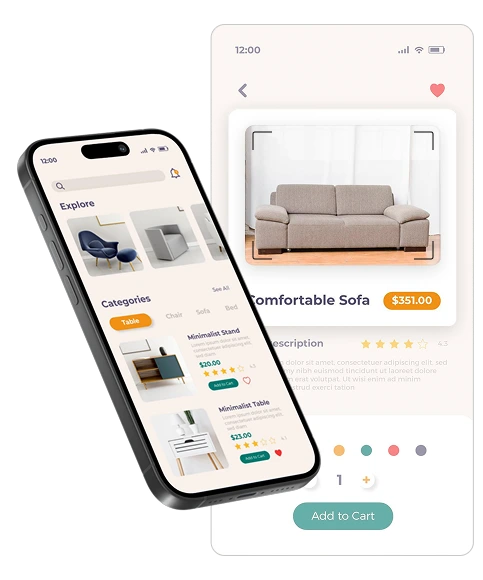
Innovative AR App Development Company for Business-Driven Solutions
Customers today demand interactive and immersive experiences, and AR delivers exactly that. Studies show that AR-based interactions are 200% more engaging than traditional methods.
As a leading augmented reality app development company, our expertise lies in creating AI-driven image recognition, QR code-activated AR, real-time motion tracking, and more to deliver measurable results with engagement.
Whether you’re launching an interactive shopping experience, a virtual showroom, or a training simulation, our custom AR app development services guarantee to deliver you higher engagement, increased conversions, and stronger brand loyalty.
With a fluent grip on AR development, our developers have delivered feature-rich solutions to a wide range of industries, including retail, real estate, healthcare, and education, which has turned engagement into long-term success.
Our Selected Augmented Reality Development Projects
We have worked with big businesses and helped them create success with our AR expertise. Explore our best AR app development projects in the portfolio section and see how they created an impact. Let’s collaborate on your next AR venture!
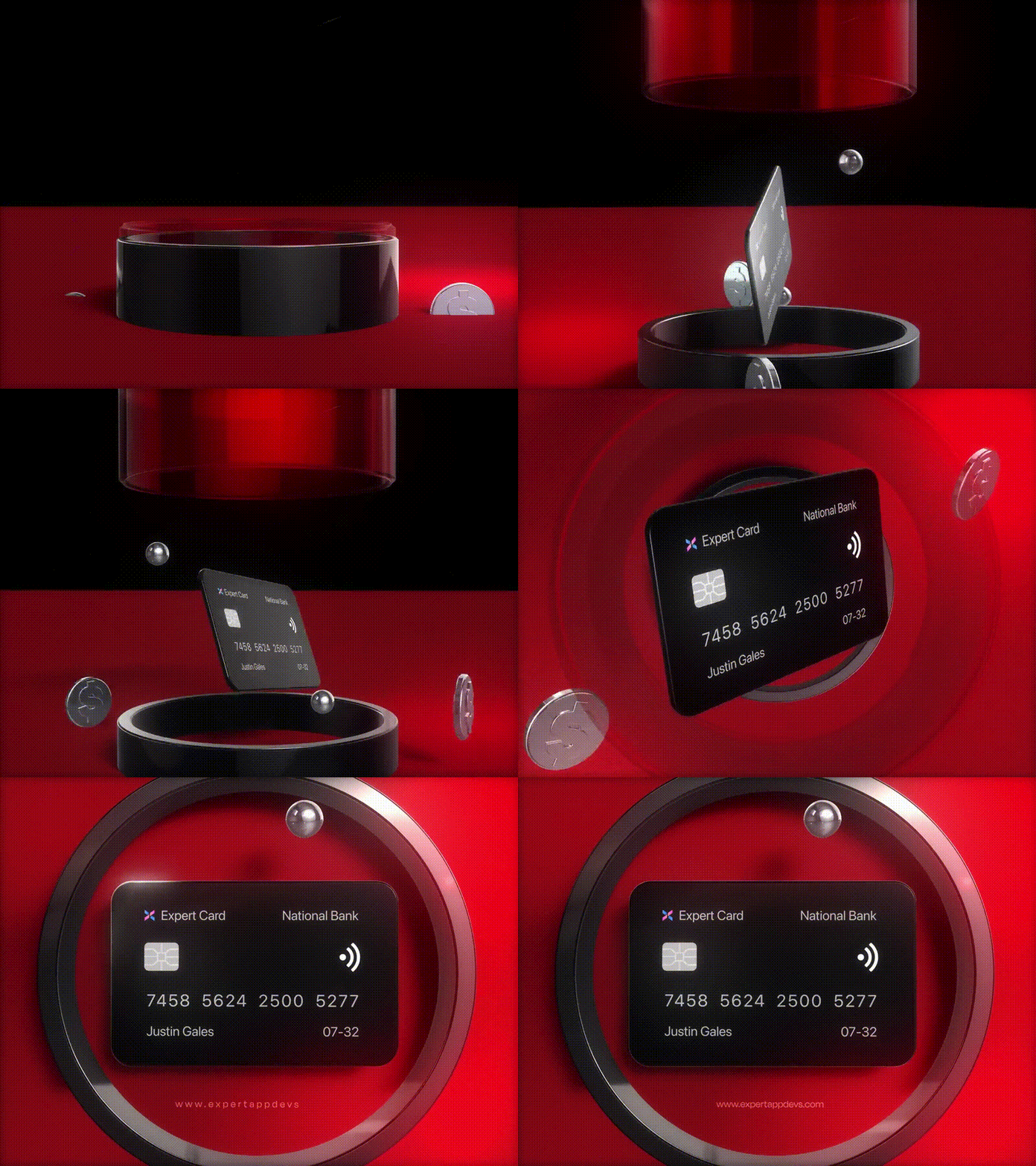
Why Expert App Devs Is An Ideal Choice For AR App Development Services?
Why Choose Expert App Devs for your Project Development
We understand that every AR app is unique that’s why we focus on customization, scalability, and innovation. Our AR app development company focuses on the big picture to take your business to the next level.

We have a decade of experience in AR development; hence, we know the end-to-end process of the AR lifecycle to align AR solutions with business goals.

Our experts have a good habit of following standard and secure coding practices like encryption, validation, authentication, error handling, and more to secure your AR app from threats.

We have spent 16 years in the tech industry, hence, we know AR/VR inside and out. Whether you want an app for iOS, Android, or a wearable device, we can customize it with the right features and functionalities.

Our experts give special attention to UI/UX, as AR is more about appearance and user experience. So, we only chose intuitive design to make the app more engaging.

We have hands-on experience in AI, SLAM, 3D modeling, and various diverse platforms to create high-performance AR apps according to current trends.

Clear communication, project updates, and easy collaboration have been a part of our work ethics and the secret behind rewarding AR app development services.

From day 1 of concept to deployment, we offer dedicated assistance related to AR app development. Our support team is actively available for post-launch support in case of any help.

We follow agile techniques for each app development project, and each module is delivered on time for approval for a timely launch of the app.
Your vision. Our AR expertise. Let’s build next-gen experiences that engage, inspire, and convert faster than you imagined.

AR app prototyping with immersive interface screens, interactive UI cards, and 3D experience planning

AR app design system with reusable UI components, immersive controls, and interactive elements

Collaborative AR design workspace for real-time feedback, 3D planning, and immersive experience creation

Interactive AR user interface with gesture-based controls, responsive interactions, and immersive navigation

Augmented reality user journey mapping with interactive touchpoints and immersive experience flows

AR application wireframe design with structured layouts, interaction mapping, and feature planning
Strategic AR Design & Interactive Prototyping
Design is the foundation of every AR app that users see first.
As this is the base of AR development, we give extra attention to the wireframes and prototypes we create.
We create a roadmap and list of technical components, features, functionalities, and other necessary things that align with user expectations and resonate with their brand image.
We use the most suitable tools from Unity, kudan or custom CMS to create use cases and technical architecture.

Agile AR app development workflow ensuring faster delivery and continuous immersive improvements

AR application API integration connecting real-time data, cloud systems, and external services

AR app development environment with advanced coding tools, 3D rendering, and immersive engineering

Cross-platform AR app development for iOS, Android, and wearable immersive experiences

Full-stack AR development combining frontend, backend, cloud, and immersive technologies

AR application deployment workflow with cloud infrastructure, automated releases, and real-time updates
AR App Development & 3D Experience Engineering
This is the step where our experts use their talent, creativity, and strategy to convert the prototype into a working 3D model by adding useful functionalities and features.
Every feature is carefully coded with clean and secure coding.
Our development phase consists of three parts before the final release of the app: pre-alpha, alpha, and beta. Our quality analyst team and developer work in coordination and test source code to ensure high performance.

Automated AR app testing workflows ensuring immersive performance, stability, and reliability

AR quality assurance and bug tracking system for issue detection and seamless user experiences

AR application compatibility testing across smartphones, tablets, wearables, and operating systems

AR performance analytics with real-time monitoring dashboards and immersive interaction insights

AR app testing across multiple screen sizes, resolutions, and device environments

AR app speed optimization and performance monitoring for smooth immersive experiences
AR App Testing, Optimization & Quality Assurance
Before launch, our testing team performs many tests, such as usability, functionality, and performance evaluations, to make sure the AR app is bug-free.
Our QA experts analyze performance under different conditions and check for motion accuracy, 3D object placement, AR tracking stability, and real-time interactions.
Plus, we test the AR app on multiple devices, operating systems, and lighting conditions to optimize usability. So you get a flawless AR app that engages users without glitches or performance drops!

Real-time AR application monitoring with analytics dashboards and immersive performance tracking

End-to-end AR application lifecycle management for scalability, updates, and long-term success

Continuous AR app support, updates, troubleshooting, and technical maintenance assistance

AR performance optimization services improving rendering speed, tracking accuracy, and engagement

AR app security with cloud backup, encryption, authentication, and data protection measures

AR server maintenance and system updates ensuring uninterrupted immersive application performance
Post-Launch AR Support & Performance Optimization
Delivering an excellent app is our priority; hence, we are always with you after deployment, even after your AR app is successful.
Our experts constantly monitor operations and performance and check for the latest framework updates, security patches, UI enhancements, or newly introduced features so that your AR app stays ahead of trends and user expectations!

AR business strategy consulting supported by analytics, market insights, and digital transformation planning

Strategic collaboration between clients and AR development teams for successful immersive solutions

AR-driven digital transformation consulting for modernizing customer experiences and operations

AR growth strategy consulting to accelerate digital engagement, customer interaction, and business success

Enterprise AR solution planning focused on scalability, engagement, and immersive innovation

AR technology roadmap planning for scalable immersive applications and future-ready innovation
AR Consulting & Strategy Planning
You can hire our consultant to get any type of guidance related to your AR app development requirement.
Share your business goals, target audience, and app requirements, and based on that, we will guide you on the best AR frameworks, integrations, and features that are beneficial to your business.
We can guide you in AR for retail, healthcare, gaming, training, and many other industries to maximize impact and ROI.
Our Projects Our Projects Digital Excellence Through Expert Engineering.






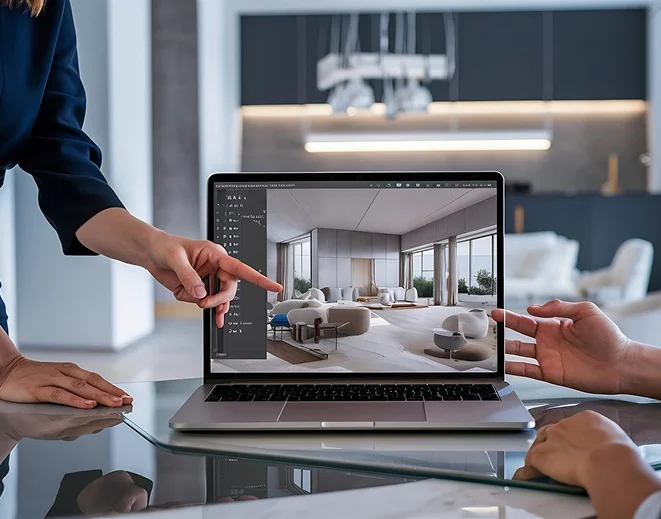












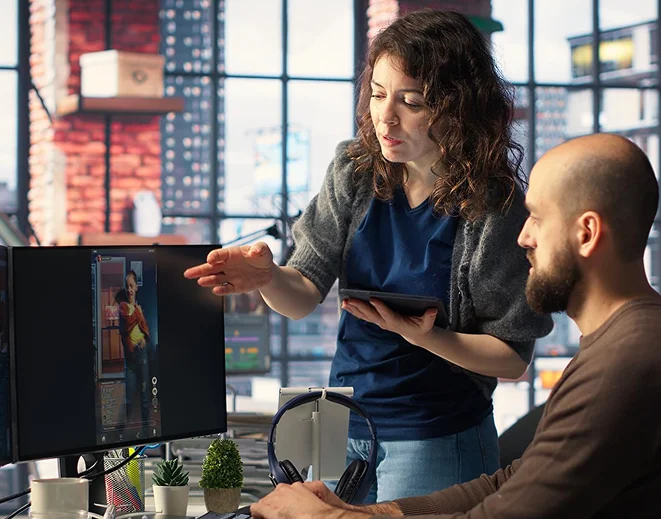


A Practical Guide to AR/VR for Decision Makers and Users
Today, everyone is aware of AR/VR due to its immersive digital experiences. AR is the latest technology that adds digital elements like images, sounds, or animations to the real world around you. It can be seen and experienced by using a smartphone camera or tablet to see the virtual object placed on top of the real-world environment. Hence, it is basically a layer on real-world elements to give users an idea about the product or service.
It is used in all sectors, not only in IT and the technology industry but also in healthcare, retail, gaming, schools, learning apps, marketing, and more.
Let's have a look at some statistics related to AR/VR:
- According to research, the AR market is expected to reach up to $198 billion by 2025.
- 40% of customers are happily ready to pay more for a product that allows AR customization.
- 64% of marketers use AR to market their products better and will also continue to use it more in the future.
- 91.75% of Gen Z are highly interested in shopping from AR-based websites.
- Products using AR have a 94% high-conversion chance compared to non-AR products.
- AR glasses are expected to make over 5 times more money between 2023 and 2026.
A short history of AR
Very few people know that AR was developed in the late 1960s. Ivan Sutherland developed the first head-mounted display system in 1968. It was a simple wire-frame drawing overlaid on real-world objects.
And over the last 50-60 years, AR has come a long way, evolving.
The term " augmented reality " was coined in the 1990s by researcher Tom Caudell.
In 1992, researcher USAF Armstrong created a virtual fixture with an advanced AR system. Then, in 1994, AR slowly entered the theatre and entertainment industry.
1998: It was seen on NFL sports broadcasting channel to show the players' position with arrow mark on the ground.
1999: NASA used AR for better navigation in space by creating an artificial vision system for their spacecraft.
Since 2000, AR has been used by various industries for day-to-day operations and opened multiple business possibilities for present and future businesses.
AR Development Basics
Now, let's get into some AR basics to understand it better.
How Augmented Reality Works?
It works by superimposing the digital elements on the real environment so users can experience the best of both worlds by interacting with virtual and real worlds.
Here is how it works:
Users need to download AR software or visit a suitable website. When a user starts the camera from the smartphone or tablet, the AR identifies the object from computer vision technology. It analyzes the information and provides the information related to a product or service, Users can also use gestures, touch, and other commands to interact with the digital object in the real world.
The size and orientation of the product automatically adjust with the user’s movement and gestures.
This is useful when the user is interested in a specific service or product but wants to see how it looks and feels to get an in-depth idea before buying it. This makes explaining the details of the product and services easier.
Types of AR
There are usually 6 types of AR:
#1. Marker-Based AR (Image Recognition AR)
This type of AR includes using visual markers like QR codes or images. When the user scans this QR, it will trigger digital content and show information, animation, or a 3D model of the product.
It's commonly used in print media, packaging, and education for interactive experiences.
#2. Markerless AR (Plane Detection or SLAM)
This doesn't need markers; it can easily detect flat surfaces like doors, floors, tables, and more using the device sensors and your surrounding geometry.
It’s often used in home design, games, and AR filters on social media.
#3. Location-Based AR (Geo-AR)
Pokemon GO game is an example of location-based AR. It needs GPS data to show content based on the user’s location. It is used to find directions, nearby places, and much more; hence, it's perfect to use in travel apps, city guides, and location-based games.
#4. WebAR
Users can experience AR directly in a phone’s web browser—no app needed. Simply open a link or scan a QR code to experience AR. It’s easy to access and is mostly used for marketing campaigns, product demos, and virtual try-ons.
#5. Projection-Based AR
It projects digital visuals or light onto real surfaces, like walls or tables, like a projector shows visual information on a screen. You can mainly see this projection-based AR in smart workplaces, exhibitions, etc. You can also interact with the projections using touch or gestures.
#6. Superimposition-Based AR
It is an improved version of all AR. It superimposes digital elements directly on the real-world surface.
For example, for medical purposes, it might show muscles over the real body.
AR vs. VR: Which One Is Right for Your Business?
| Feature | Augmented Reality (AR) | Virtual Reality (VR) |
| Experience | Enhances real-world environment with digital elements | Creates a completely virtual, immersive environment |
| Device | Smartphone, tablet, AR glasses | VR headset (e.g., Oculus, HTC Vive) |
| User Movement | User stays in real-world surroundings | User is fully immersed and isolated from the real world |
| Accessibility | More accessible and cost-effective | Requires special equipment and setup |
| Best Use Cases | Retail, marketing, education, real estate, maintenance | Training, simulations, gaming, virtual tours |
| Development Cost | Usually lower, easier to scale | higher due to complexity and hardware needs |
| User Engagement | Interactive but still aware of surroundings | Highly immersive, attention-focused |
| Ideal For | Enhancing real-world interaction | Replacing the real world with a controlled virtual experience |
The Future of AR Technology: Trends to Watch
Since the launch of AR, it has continued to evolve and innovate. Below are some of the future trends related to AR technology.
#1. AR Glasses & Wearables
Today's AR glasses and wearables are mostly used in fitness and offices. Most of the modern generation prefers to use this device as it is practical and the easiest option in a fast life. Currently, big tech companies are investing heavily in these things to open new streams of income and business growth.
It is helpful in industries like healthcare, education, and remote collaboration.
#2. WebAR Adoption
As it directly allows users to experience the AR from the browser without the need of any app, it's mostly used by businesses to provide quick product demos, interactive ads, and immersive storytelling on any device.
#3. AR in E-commerce & Retail
According to a recent 2024 survey, 55% of retail businesses are using AR to offer improved and satisfactory shopping. AR has become the most powerful tool today in retail and e-commerce shopping. From clothing and eyewear to furniture and makeup, AR is helping users to shop without doubt due to its virtual try-ons, 3D product previews, and in-home visualization functionality.
#4. AI + AR Integration
AI, when combined with AR, gives incredible results. With real-time object recognition, voice commands, predictive interactions, virtual assistants, guided instructions, and intelligent filters, it helps to provide a more personalized experience to customers by providing what users actually want.
#5. AR in Remote Work & Collaboration
AR made remote working and collaboration much easier. This also opens multiple doors of business for industries because clients and stakeholders can easily interact using AR tools to show 3D models, visualize data, and interact in real time across distances.
#6. AR in Healthcare & Training
AR is used in medical colleges and hospitals to train medical students about surgical procedures before they operate directly on patients. It is the best learning tool also in military and aviation to train people on fields and guide them for positions and weapons.
Ethical and Privacy Considerations
As AR is used everywhere in every industry, there are also some ethical and privacy considerations to keep in mind.
#1. Data Security in AR Applications
AR apps often use sensitive data like your location, surroundings, and camera feed to function properly. If you are an AR app development company using the user's data to provide them with better personalized results, you must use strong security measures to keep personal information safe from hackers or unauthorized access, especially when apps are used in public or private spaces.
#2. User Consent and Transparency
Trust and transparency are important pillars of the business. You must take consent or permission from the users if your app is collecting their data. Also clear what data is collected, how it will be used, and who can access it.
AR Solutions
Get in touch with our experts
AR refers to augmented reality that is based on real-world settings, while VR means virtual reality and is completely virtual.
In AR, digital elements are placed in the real world. Famous examples are Google Lens, Snapchat, and more. While VR helps to create a completely new virtual environment.
AR can be used using a smartphone, while to see the VR, you need a headset device. Examples: Google Earth, virtual try-on for e-commerce stores like Amazon, Nyka, and more.
We are an experienced AR app development company with over 16 years of experience; hence, we specialize in marker-based AR, markerless AR, location-based AR, WebAR, AR apps for mobile devices, and various other AR solutions for smart glasses and headsets.
We use ARKit, ARCore, Unity3D, Unreal Engine, WebAR frameworks, and AI-powered AR solutions to create interactive experiences.
AR helps customers to visualize products in a real-world environment with the help of functionalities like virtual try rooms and more. This boosts customers' confidence as they can check every detail of the product and buy the item with confidence.
Yes, we offer ongoing support by checking the regular updates, monitoring and testing bugs on a regular basis to identify the issue immediately before it affects your business.
Our ultimate goal is to make sure your AR application runs smoothly with complete functionality.
We have an experienced team of AR experts who are capable of handling technical complexities to ensure users have realistic and engaging experiences with AR devices. Other than this, we also specialize in checking device compatibility for AR apps to make sure they run fine on every device.
There are so many things to consider if you want to develop the best AR app, like user experience, integration of virtual and real worlds, performance optimization, robust tracking capabilities, and more. Below are some aspects that you must keep in mind,
- Select design and features according to your app concept and user experience.
- Create digital elements precisely.
- Choose SDK integration according to your AR app capabilities.
- Use strong algorithms for motions and tracking real-world objects. Check for easy navigation and make sure the user can easily interact digitally.
- Optimize the AR app according to iOS and Android compatibility.
It depends on your use case and audience. We offer both WebAR solutions that work without an app and mobile-based AR applications for iOS and Android. Schedule a call with our AR expert if you have any specific requirements.