


- TikTok & Social Media App Market Statistics
- Business Impact and Monetization Models
- Core Features of a Modern TikTok-like App
- Advanced & Unique Features
- TikTok Alternatives and Strategic Differentiation
- Cost Factors and Influencers
- Cost Estimation & Budget Planning for TikTok-like App Development
- TikTok-like App Development Process: Step-by-Step
- Technology Stack & Integrations
- Choosing the Right Development Partner for TikTok-like App Development
- Conclusion
- FAQs for TikTok-like App Development
Ready to transform your vision into reality?
Get Started
TikTok-like App Development: Cost, Features and Timeline (2026 Edition)
 189
189
 0
18 Nov 2025
Min Read
0
18 Nov 2025
Min Read


 Share
Share

 Download PDF
If you are planning TikTok-like app development, you are exploring opportunities within the beating heart of the digital economy, the creator movement. Driven by creator-backed content and user engagement, especially with Instagram reels and TikTok videos, the short-form video app market is expected to reach $3.17 billion by 2030.
Your users are hooked onto bite-sized videos that entertain and educate them. By delivering such platforms, you can skyrocket your business value. Whether you are a founder, developer, or the CTO of an enterprise business, launching a TikTok-clone app shouldn’t be about replicating another’s success; rather, it should be about building a space where creators can collaborate, connect and inspire others.
By tapping into this rising market, you will tap into newer opportunities, increase revenue opportunities and connect with a wider audience base.
Having developed TikTok-like apps for startups and established businesses, we have mastered the roadmap and can guide you effectively through every stage of building your own short-video platform. Through this blog, we will walk you through the cost, timeline and key features to build an app like TikTok that stands out.
TikTok & Social Media App Market Statistics
TikTok’s rise is a phenomenal story to tell. From its early days as another viral application to the time when it became a global social media leader, the app has gained over 1.6 billion monthly users. In 2024 alone, the app managed to generate $23 billion in revenue, showcasing how it redefined content consumption with short-form content.
TikTok has transformed everyday content consumers into creators and brands into storytellers. You will notice that the platform has influenced everything from music, education to marketing and shopping.
No wonder this massive shift has fueled a growing interest among businesses and startups in TikTok clone platforms. With the clone applications, you can replicate the social energy and user stickiness that make TikTok irresistible to its users. As more users are engaging with bite-sized videos, it has made the opportunity to enter this segment bigger than ever.
We have seen this transformation first-hand, having helped multiple brands and startups create apps like TikTok. We have witnessed how these clones can help you unlock fresh revenue streams, refine engagement and even fuel community growth.
Let’s take a closer look at how these apps can drive real business impact and explore the monetization models that fuel massive growth.
Business Impact and Monetization Models
Monetization for short-form video platforms follows a multi-dimensional strategy, which is why TikTok like app development is an excellent opportunity for you to follow. Most popular apps blend multiple revenue streams instead of relying on one.
For instance, TikTok uses in-app purchases like virtual gifts or coins to generate billions. When you multiply these microtransactions across millions of users, you get a global user spending that is over $4 billion.
Advertising is another model that is used to generate revenue. Using sponsored challenges, brand takeovers and short-form video ads, TikTok generated over $18 billion in 2024 alone.
If you aim to build an app like TikTok, you can replicate this approach and offer marketers a vibrant space to connect with active and fully-engaged users. Additionally, you can also use subscription tiers with a freemium version of the app to create a predictable revenue for your business.
These approaches will also help your users get an ad-free experience along with enjoying exclusive creator content. Lastly, there are the influencer and creator tools, which happen to be the secret sauce of monetization and engagement.
Using features like live streaming, brand collaborations and creator marketplaces, your platform can help creators earn more and keep their users engaged. Instagram Reels and YouTube Shorts have adopted this model, investing millions in creator funds to encourage platform loyalty.
Brand Engagement Benefits
The charm of these monetization strategies extends beyond money, enabling more connection and visibility for your business. You can directly engage with your audience through creators, earning trust faster and building stronger relationships.
TikTok, Instagram Reels and YouTube Shorts have shown how interactive campaigns like branded challenges and shoppable videos can increase sales while also entertaining their users.
This engagement loop you get with short-form video content apps like TikTok can be a game-changer for your business. Every post, collaboration or even duet poses an opportunity to promote your application organically and widen the reach. Moreover, the TikTok clone can become a brand amplifier for businesses joining the creator zone, thus fueling loyalty and long-term retention for businesses.
That’s exactly why investing in this space may not be about following a trend; it is about building an ecosystem where content and creativity thrive along with commerce.
Core Features of a Modern TikTok-like App
After exploring engagement and monetization, it is time to look at what makes apps like TikTok truly addictive: their features. By understanding them, you can plan smarter and budget better to deliver long-term success. Having developed multiple short-video applications like TikTok, our team knows the exact features that separate a viral platform from an ordinary one.
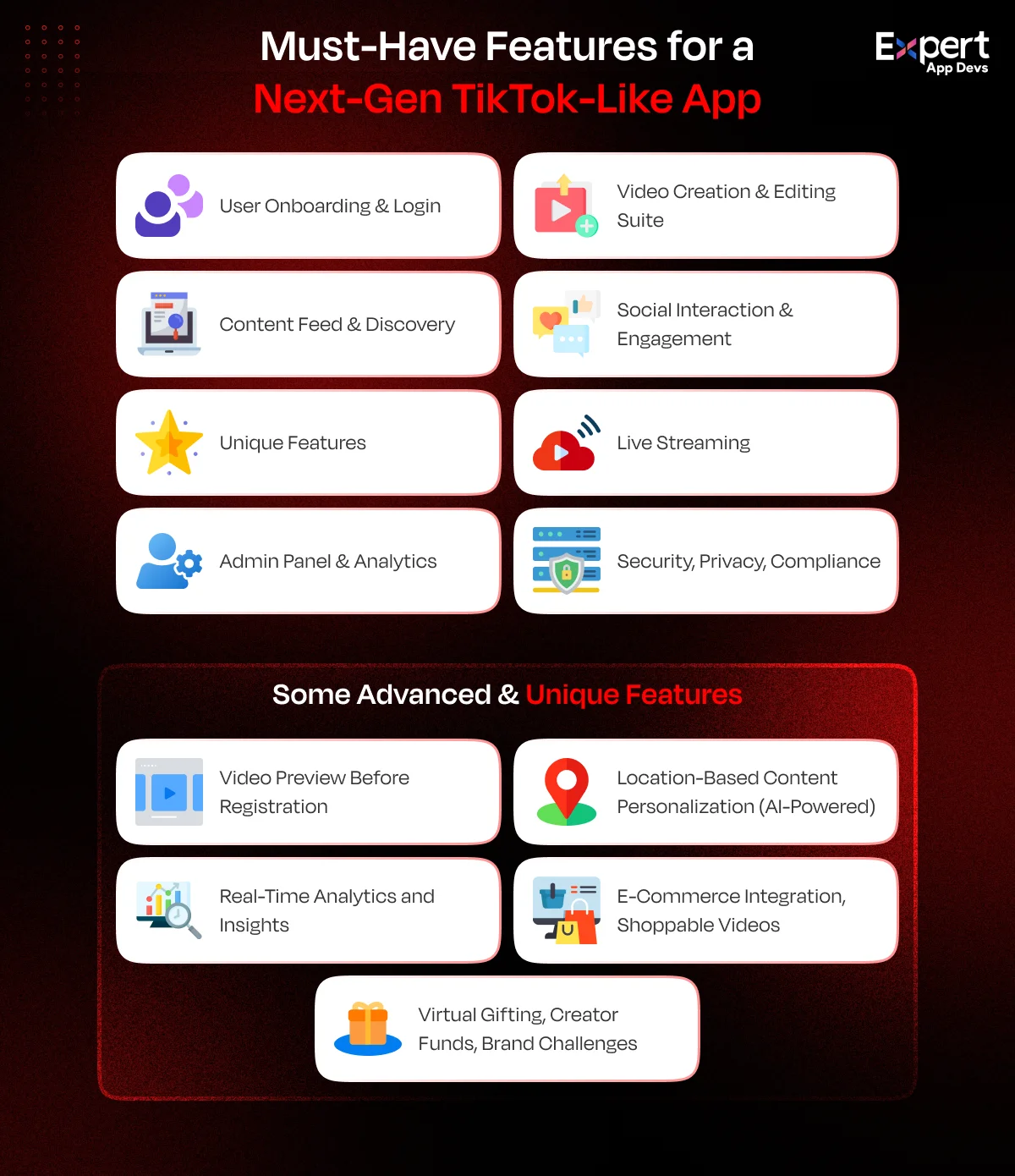
#1. User Onboarding & Login
First impressions matter. With a smooth sign-up via email, social accounts or quick OTP can keep your users from dropping off. You should also start personalizing the application at this point by capturing the preferences.
When you build an app like TikTok, incorporating an intuitive onboarding can assure retention from day one. Our experience shows a fast and frictionless entry process can boost your sign-ups by nearly 30%, setting the stage for repeat usage.
#2. Video Creation & Editing Suite
Creation lies at the core of a short-video content platform. Having a rich suite of AR effects along with current filters and trending music library will let your users express themselves freely. TikTok stickiness can be attributed to the editing simplicity it offers. When you include optimized editing tools, it will enhance creativity and ensure content virality, promoting loyalty.
#3. Content Feed & Discovery
Users like to keep scrolling through an engaging content feed. With smart algorithms, hashtags and AI-backed personalization, you can ensure relevant videos appear instantly. Location-based recommendations can also enhance connection for your users.
The “for you” page on TikTok is an excellent example of how tailored discovery can improve engagement. You must focus on designing algorithms that blend user intent with novelty and retention to maximize engagement.
#4. Social Interaction & Engagement
Short-video platforms feel more alive because of engagement components like likes, shares, comments and duets. These micro interactions can help foster communication, build communities and enhance creators’ visibility.
When you craft them right, engagement loops can turn your casual viewers into loyal users. We prioritize feedback systems and smart notifications to re-engage users without overwhelming them, ensuring participation among users is natural and rewarding.
#5. Unique Features
By adding features like Duet or Challenges, you can drive viral participation. You can add new revenue streams while making them exclusive by adding shops or premium video subscriptions.
With creator-led challenges, you will amplify growth exponentially. You must balance entertainment with opportunity when designing features that help users create, compete and collaborate seamlessly in your platform.
#6. Live Streaming
You can increase the authenticity of your application by adding the live streaming feature. Real-time chat along with gifting and reactions in the live streams, will help translate your passive users into active ones.
TikTok has been successful with the virtual gifting feature, which also shows how powerful it can be. You must build a scalable system that can manage concurrent viewers while offering high-quality streaming to boost engagement and monetization.
#7. Admin Panel & Analytics
There is a strong admin ecosystem backing a great platform. Adding dashboards for user management, performance insights and analytics helps you stay in control.
Our implementations focus on clarity and efficiency to let admins moderate, track the trends and even optimize campaigns seamlessly. Using the right analytics, you can understand your users’ behaviour and optimize your strategy accordingly.
#8. Security, Privacy, Compliance
You need your users to trust your application to build longevity. Compliance with GDPR and CCPA, along with AI-led content moderation and strong data encryption, can ensure brand credibility. You must integrate proactive security layers that help detect misuse early.
Lastly, you must prioritize safety to ensure your platforms are reliable and reputable, which can foster growth.
Advanced & Unique Features
As your short-video platform evolves, standing out means you must think beyond basics. Advanced capabilities occur when you blend innovation with engagement to foster real growth.
There are several features, ranging from video previews to entice users for pre-sign up to AI-backed localization that can elevate your users’ experience and retention. These features can unlock newer revenue streams as well.
#1. Video Preview Before Registration
Allowing your users to preview the trending videos before they register can spark curiosity and increase sign-ups for your TikTok clone application. With this feature, you can remove friction while helping your users experience the app’s vibe before committing to it. You can easily improve conversions by creating a FOMO effect that translates regular browsers into users.
#2. Location-Based Content Personalization (AI-Powered)
This feature helps you create tailored content that aligns with local interests to boost relevance and watch time. For example, the “for you” page thrives on hyper-local engagement to help creators gain visibility and bolster community growth organically. By integrating personalization, you can improve retention rates as users find content that is familiar and relatable.
#3. Real-Time Analytics and Insights
Your creators and admins of the company accounts thrive on insights. That’s why you need real-time dashboards that offer views, engagement and earnings that can translate available data into strategy. TikTok and Instagram reels have been using analytics to help creators optimize content, match the trends and align with the end user’s timing. We have introduced similar tools in the apps we have built to help businesses and creators make informed decisions that enhance their audience engagement.
#4. E-Commerce Integration, Shoppable Videos
Shoppable videos have grown exponentially, merging entertainment with commerce. TikTok introduced its Shop which lets users buy products without leaving the application. As a result, it turns short-form videos into conversion engines.
You can embed eCommerce modules into your apps to shorten customer journey and amplify revenue to create a seamless and purchase-ready experience for your users.
#5. Virtual Gifting, Creator Funds, Brand Challenges
These features can help you motivate users to participate and reward them for creativity. These will become the two strong pillars for sustained growth. With brand challenges, you can increase visibility while ensuring viral engagement.
TikTok wasn’t an accidental success. Its popularity resulted from the features that users loved. You can design modules that help businesses and creators improve loyalty and monetization.
TikTok Alternatives and Strategic Differentiation
Before you begin defining your roadmap, you must explore TikTok alternatives and identify how to make your app stand out with the current features or when to innovate it with newer features.
Popular Apps like TikTok and Their Unique Features
While TikTok is the leader of short-form videos, there has been an increase in the number of competing platforms. This signifies there is room for creativity and innovation. Each app brings something unique to the table, in terms of user experience, algorithmic strength or content focus. By understanding these nuances, you will know how to make your app distinct.
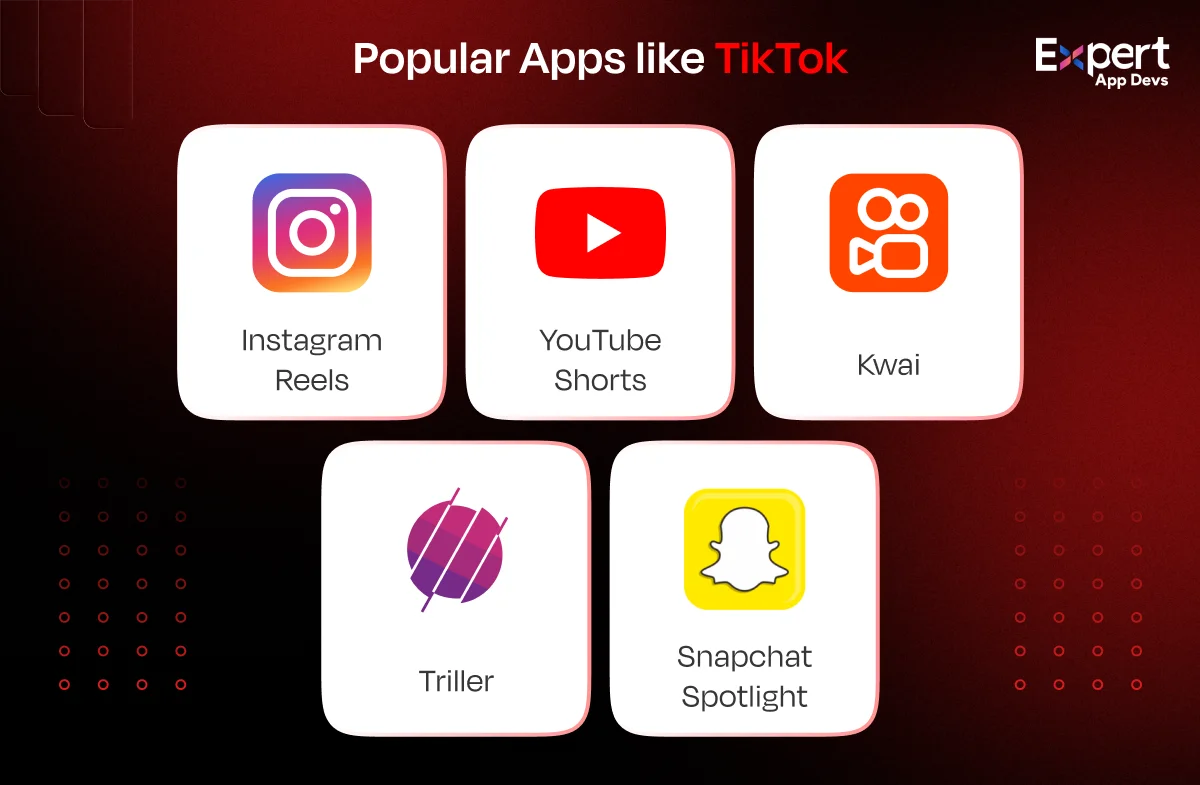
Let’s look at the top contenders for TikTok alternatives.
- Instagram Reels: Reels is a feature integrated into Instagram’s ecosystem, tapping into their user base of over 2 million. This way, they combined visual storytelling with discoverability, making the platform ideal for creators who are on social media.
- YouTube Shorts: Shorts is backed by the massive creator base of YouTube and uses its in-built monetization with search capabilities to enhance user experience. This app was designed for creators who need long-term visibility with quick engagement.
- Kwai: This application is popular in emerging markets like India and Brazil. They focus on local culture, community-backed trends and relatable content that bridges the gap between social and entertainment.
- Triller: They are a music collaboration and celebrity-backed content platform. It comes with brand partnership and editing tools that entice the creators who want to attract audiences in their niche.
- Snapchat Spotlight: Snapchat’s spotlight prioritizes authentic and unfiltered clips that is supported by an incentive-driven payout system to bolster originality.
These apps indicate how the short-video apps have diversified the landscape instead of saturating it. Each of them has been successful in solving a specific user need, such as niche community building or direct monetization. When you are trying to understand how to build app like TikTok, these examples will be your guide towards innovation gaps and newer experiences to incorporate that set your platform apart.
How to Choose the Right Alternative or Innovate Beyond TikTok?
The key question isn’t “how to build an app like TikTok?”; it is, how do you reimagine this application’s model for your audience? The most popular and strong clones didn’t directly copy the pioneers; they improved upon them.
Start by knowing where your app will fit in the creator econonmy. Would it enable discovery, make monetization simple or simplify their video creation abilities? Most successful TikTok alternatives have found a balance between the proven engagement tactics with fresh and purposeful innovation.
A few of these apps focus on niche communities like fitness or travel, while others have incorporated immersive technologies like AR filters and AI-powered content curation. With these innovations, you can make your platform functional and memorable.
In our experience, we have noticed that clarity of vision has helped build scalable solutions. When you understand market gaps, user motivations and even the positioning of your brand in the early phases, you can build your product successfully. It will also enable your investor’s confidence in the product.
Cost Factors and Influencers
As you move from concept to actual development, you must understand the cost influencers. Every decision, from platform selection to ongoing maintenance, will shape your budget and scalability needs. Here’s a detailed breakdown of the key factors determining how much it costs to build an app like TikTok.
#1. Platform Choice (iOS, Android, Cross-Platform, Native vs Hybrid)
Your platform choice lays the foundation for your development cost. Native apps extend excellent performance and a good user experience. However, they cost more as you need to build separately for iOS and Android.
Cross-platforms like React Native or Flutter can reduce cost and development timeline but, the performance may not be as great as native apps. Having vision clarity can help align your goals with your budget and timeline.
#2. UI/UX Design Complexity and Personalization
Designs are crucial to create great first impressions and maximize user retention. When you design a minimal interface, you can speed up development and make it cost-effective. Adding interactive elements, animations and personalization can increase the design hours.
You can improve engagement and lower churn rate by introducing a structured UX. To ensure your UI/UX design is modern, intuitive and aligned with user expectations, you must allocate sufficient budget here.
#2. Tech Stack, Backend Infrastructure, Third-Party Integrations
Your tech stack choice can influence app scalability and development costs directly. Advanced stacks like NodeJs, AWS and Firebase can ensure high performance while raising setup costs. Payment integrations, AI moderation and analytics can improve functionality and add to your costs.
Investing in a robust backend early in your development can help build an app that handles growth without experiencing downtime or needing constant refactoring.
#3. Feature Set: MVP vs Advanced
Deciding between developing an MVP vs a feature-rich TikTok like app can determine your initial spend. An MVP includes core features that can be built and launched quickly, while advanced versions include features like analytics and personalization.
By using a phased approach to build your TikTok clone, you can reduce risks and spread investment wisely. You can also allocate the funds according to the product stage, controlling your development costs.
#4. Team Composition
Development costs may vary according to the size of the team and their geography. In-house teams offer better control, but they come at a premium cost. Outsourcing or using hybrid approaches can optimize the costs.
Adding roles like designers, developers, testers and project managers can contribute to the final cost estimate. Regional differences in hiring costs can also impact your budgeting. For instance, hiring a developer from India may cost less than hiring someone from the US.
#5. Maintenance, Updates and Support
Launching is all about getting your app into the market. It is continuous maintenance that offers stability and relevance. For regular updates, bug fixes and performance optimization, you should set aside 15% to 20% of your initial development cost. With proper post-launch support, you can reduce user frustration while enhancing retention.
When you budget for continuous support and maintenance, you invest in your app’s long-term success.
#6. Compliance and Security
Data protection, secure payment gateways and GDPR or CCPA compliance are non-negotiable when developing apps like TikTok. You must build using privacy-first frameworks. While they increase your initial costs, it can reduce legal and reputational risks later.
With regular audits, encryption protocols and AI-backed moderation tools can increase the security. That’s why investing in these protocols isn’t an option; it is critical to boost user trust, platform credibility and business continuity.
#7. Hidden Costs: Server, Marketing, APIs, Content Moderation and AI Features
Beyond the visible development expenses lie some of the hidden costs that can increase your budget quickly. Server hosting, APIs, content moderation and marketing campaigns need continuous investment.
These components help your apps run efficiently and reach your audience. By factoring them early, you can prevent budget overruns and ensure your financial planning is aligned with real-world operational requirements.
Cost Estimation & Budget Planning for TikTok-like App Development
It costs anywhere between $30,000 to $200,000 to build an app like TikTok. The actual cost depends on the platform choice, feature depth and development region. A clear estimation using these factors can help you plan your budget well.
The basic formula most teams use to determine the cost would be
Development Cost = Total Development Hours * Hourly Rates
Here is a look at the development time and cost tables by platform, region and feature.
Hourly Rates by Region
|
Region |
Average Hourly Rate (USD) |
|
North America |
$80 to $150 |
|
Western Europe |
$60 to $120 |
|
Eastern Europe |
$40 to $70 |
|
India & Southeast Asia |
$25 to $50 |
Development Hours and Cost by Platform
|
Platform |
Approx Hours |
Cost Range |
|
iOS (Native) |
1000 to 1400 |
$40,000 to $90,000 |
|
Android (Native) |
1000 to 1500 |
$35,000 to $85,000 |
|
Cross-platform |
1200 to 1600 |
$30,000 to $70,000 |
Development Hours and Time by Features
|
Feature |
Estimated Hours |
Approximate Timeline |
Description |
|
User Registration & Login |
80 to 120 hours |
$2,400 to $7,200 |
Basic email, social and OTP login available |
|
Video Upload and Playback |
150 to 200 hours |
$4,500 to $12,000 |
Core video recording, playback engine and compression |
|
Video Feed and Recommendations |
180 to 250 hours |
$5,400 to $15,000 |
AI and algorithm-based personalized content discovery |
|
Likes, Comments and Sharing |
100 to 150 hours |
$3,000 to $9,000 |
Engagement features to foster interaction and retention |
|
Push Notifications and Messaging |
120 to 160 hours |
$3,600 to $9,600 |
Real-time alerts and chats |
|
Live Streaming |
250 to 350 hours |
$7,500 to $21,000 |
High-performance real-time broadcasting using chats and reactions. |
|
AR Filters and Effects |
200 to 300 hours |
$6,000 to $18,000 |
Visual effects, gesture tracking and camera enhancements |
Cost by App Type
Here is a breakdown of the app cost by the type of app you have developed.
|
App Type |
Description |
Estimated Cost Range |
|
Basic Application |
MVP using video upload, likes and feed |
$30,000 to $50,000 |
|
Mid-range |
Adds 60analytics, moderations and basic AI features |
$60,000 to $90,000 |
|
High-end |
TikTok-like app with AR and personalization |
$100,000 to $200,000 + |
Even after your TikTok clone goes live, you cannot stop working on it. This is a continuously evolving product that requires continuous updates, performance optimization and content moderation. You must set aside about 15-20% of the initial development cost annually to maintain the product.
The total maintenance cost depends on infrastructure needs, the scalability of the app and security demands. By neglecting maintenance, you can slow load times, increase bugs and even lose engagement.
Ongoing costs include server and CDN usage that scale with your uploads and traffic requirements as well as API expenses like maps or AI filters. You might also need to conduct periodic updates for new devices and OS versions.
To optimize these expenses, you must automate server scaling and content caching. You should also review analytics regularly to remove the unused features and schedule performance audits frequently.
TikTok-like App Development Process: Step-by-Step
To build an app like TikTok, you need to go beyond coding; you must align your vision with functionality and user experience into a seamless product. Understanding each stage of the development process can help you plan resources efficiently, estimate the timelines and ensure your app resonates with the creators.
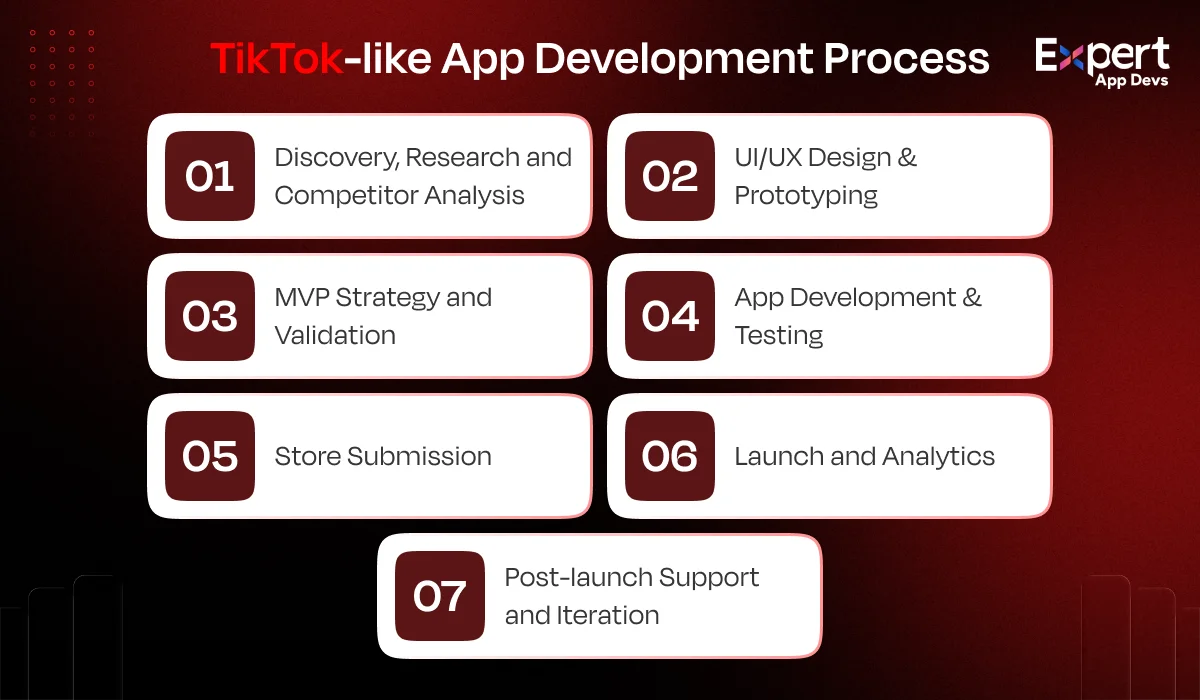
#1. Discovery, Research and Competitor Analysis
You lay the foundation for success in this phase. You must define goals, study your users’ behaviour and analyze the competition to determine feature gaps. Detailed research can help deliver an application that meets market expectations and offers a unique value proposition. This will help set the tone for design, development and positioning decisions from the start.
#2. UI/UX Design & Prototyping
Design shapes your vision. That’s why wireframes and interactive prototypes are important; they help visualize user flow, refine navigation and test engagement early.
With a strong UI/UX, you can balance creativity with usability to create intuitive interfaces and engaging interactions along with accessibility across devices. Eventually, great designs help retain your users from the first tap itself.
#3. MVP Strategy and Validation
Developing an MVP can get you into the market faster with reduced risks. Your MVP should include features like video creation, engagement tools and a feed that enables feedback from real users. Using this approach, you can improve functionality, confirm your user’s interest and prioritize updates before scaling to a full-fledged TikTok like application.
#4. App Development & Testing
After design, your development phase starts with frontend and backend integration. Simultaneously, you must invest in regular QA by ensuring smooth video uploads and flawless playback. With performance and compatibility tests across devices, you can minimize glitches and ensure a stable experience that strengthens brand credibility.
#5. Store Submission
Before you launch the application, it must pass the Google Play and Apple Store reviews. You must go implement privacy compliance, optimize metadata and create compelling visuals.
For effective app store optimization, you must improve discoverability and boost downloads so that you can improve visibility without investing in marketing.
#6. Launch and Analytics
For a successful app launch, you must combine timing, strategy and metrics. After release, you must use analytics tools to track downloads, retention and engagement trends. Getting early user feedback can drive performance tuning and feature prioritization. On the other hand, digital marketing campaigns can help attract creators and sustain user growth.
#7. Post-launch Support and Iteration
Continuous improvement to your application can guarantee success. That’s why you must invest in regular updates, feature rollouts and proactive bug fixes to maintain performance and user trust. Ongoing support can improve scalability, compliance and security, even when your platform grows. Iterative releases help you evolve your app with the newer user trends, keeping it competitive.
Technology Stack & Integrations
At this point, where you have a complete understanding of the budget and plan to allocate resources, choosing the right tech stack is critical. It will determine the scalability, performance and future flexibility for your application.
When you choose wrong, you can slow development, increase costs and even limit features. Selecting the right technology stack can help you build a TikTok like app that’s agile, secure and easy to scale with a growing audience base.
To speed up development and widen the reach, you must use cross-platform app development frameworks like React Native or Flutter. They offer seamless performance across operating systems and devices. Adding backend technologies like Python or Node.js can add real-time functionality with stable data handling mechanisms. You should consider using databases like MongoDB or PostgreSQL to handle user interactions efficiently.
With cloud platforms like AWS, Azure or Google Cloud, you can increase reliability and elasticity that is needed to manage heavy video content with traffic spikes. Adding AI and ML can bolster personalization, powering your app with video recommendations, content moderation and smart searches. Integrating music and content APIs can help add dynamic soundtracks while payment gateways can help you implement monetization models like subscriptions or in-app purchases.
Lastly, real-time messaging and notification services can help keep users connected and engaged, increasing your app’s stickiness.
Aligning the tech stack with your business goals and user expectations, you will be able to deliver a future-ready platform that can compete with industry leaders while adapting to evolving market needs.
Choosing the Right Development Partner for TikTok-like App Development
TikTok app development is a large-scale initiative that requires strategic expertise alongside technical skills. With the right development partner, you can translate your vision into a scalable product while keeping your deadlines, budgets and quality in sync. This choice can help define whether your app is successful or gets lost in the clutter.
#1. In-house vs Outsourcing vs Agency
In-house team offers better control but needs a heavy investment in terms of hiring, tools and management. Outsourcing can be cost-efficient but comes with coordination challenges.
By partnering with an experienced app development agency, you can combine technical depth with cross-domain expertise and accountability. With our vast experience in TikTok-like app development, we understand how agency collaboration can accelerate launch timelines and innovation.
#2. Vendor Selection Tips and Case Studies
Always look for partners who have prior experience with social networking or video-centric applications. Having a strong portfolio, positive client reviews and transparent communication protocols are crucial.
You should look into their case studies that demonstrate their successful platforms, showcasing their understanding of scalability and user retention. Lastly, request them for a walkthrough of real projects.
#3. Budget Control, Validation, Portfolio Highlights
The right partner would help you optimize costs by offering MVP-first strategies along with open-source tools and reusable components. To maintain trust, you can also implement budget transparency and milestone-based payments.
Conclusion
Short-form video content app like TikTok is a revolution that is showing no signs of slowing down. The next breakout platform could be yours. All you need is the perfect strategy blended with technology and a team to create an app like TikTok. Make sure you are not replicating their product but crafting an experience that connects and entertains millions.
From planning to defining the features and allocating the resources, each step demands foresight with precision. By understanding users’ needs, integrating community-backed features and adopting scalable technology, you can transform your idea into a market leader. You must innovate boldly and execute efficiently to win in this space.
Having helped multiple businesses and startups convert their concepts into successful TikTok clones, we know what it takes to navigate the journey from concept to launch. Expert App Devs offers professional mobile app development services across Android, iOS, Flutter, React Native, and other cross-platform technologies. We deliver high-performance native and hybrid mobile solutions tailored for startups and enterprises. In addition to end-to-end development, we provide a full range of application services, including maintenance, support, and ready-made solutions to clients in North America, Europe, the Middle East, and Oceania through strategic outsourcing from India. Connect with us to build an app that sets new benchmarks for engagement and performance.
FAQs for TikTok-like App Development
#1. Is building a TikTok-like app still profitable in 2026?
Ans: Yes, but only if you avoid building a generic TikTok clone.
The global short-video app market is projected to exceed $7.16 billion in 2026, growing at over 15% CAGR. Profitability now comes from niche-focused communities, where you can charge higher ad rates and build loyal audiences.
Apps niche around finance, fitness, education, beauty, food, gaming, or local communities perform significantly better.
A well-positioned product can generate multi-million-dollar revenue streams through ads, commerce, and creator monetization.
#2. Which security features are mandatory for TikTok-like apps in 2026?
Ans: In 2026, compliance and safety are non-negotiable. Your app must include:
-
Data Privacy & Legal Compliance
- GDPR, CCPA & global digital privacy compliance
- Parental consent flows for minors
- Right to delete/export personal data
- Dedicated Data Protection Officer (DPO) for enterprise-scale apps
-
User & Content Safety
- AI-powered moderation for hate speech, nudity, violence, self-harm
- “Family Pairing” parental controls
- In-app reporting + safety dashboards
- Digital wellbeing tools (screen-time, session reminders)
-
Technical Security
- End-to-end encrypted messages
- Secure camera/mic/location permissions
- Anti-bot & anti-fraud detection
- Real-time threat monitoring + breach reporting system
Without these, your app cannot pass store review or meet 2026 legal standards.
#3. Which regions have the highest demand for TikTok alternatives in 2026?
Ans: Demand is strongest in:
1. Regions where TikTok is banned or restricted
- India remains the world’s largest untapped short-video market after the TikTok ban.
Local apps exploded after the ban, showing strong user appetite.
2. High-Growth Emerging Markets
- Asia-Pacific (APAC) is expected to hold 24% global market share
- The Middle East is rising in creator economy adoption
- South America has strong growth for localized short-video apps
- Southeast Asia has high mobile-first population
3. Regions facing regulatory pressure
Countries tightening privacy regulations (U.S., parts of Europe) create opportunities for compliant alternatives.
#4. Which monetization model works best for TikTok-like apps in 2026?
Ans: The winning strategy is hybrid monetization. The most profitable mix is:
1. Social Commerce (Top Revenue Driver)
- Shoppable videos
- Creator storefronts
- Affiliate links & brand collaborations
2. Virtual Gifts & In-App Currency
- Digital coins
- Creator tipping
- Special live-stream gifts
3. Premium Subscriptions
Offer perks like:
- Ad-free experience
- Advanced AI editing tools
- Creator analytics dashboards
4. Targeted In-App Ads
- Native video ads
- Brand takeovers
- Sponsored hashtag challenges
Hybrid monetization increases ARPU and ensures predictable revenue.
#5. Which features make a TikTok-like app stand out from competitors?
Ans: Cloning TikTok is not enough; differentiation is everything.
Top standout features in 2026 include:
1. Advanced AI Editing Tools
- Auto captions (multi-language)
- AI script generator
- Smart trimming
- Voice isolation
- Background noise cleanup
2. Hyper-Niche Functionality
Tailor features to your niche, e.g.:
- Finance: stock widgets, market updates
- Fitness: AI rep-counting using the camera
- Cooking: AI recipe creation from videos
3. Better Creator Monetization
- Built-in store
- Subscriptions
- Transparent earnings dashboard
4. AI-Powered Personalization
A feed that adapts instantly to user behavior.
#6. Which are the top 10 TikTok-like app development companies in 2026?
Ans: Based on 2025–2026 industry rankings, the most trusted companies for short-video or TikTok-like app development include:
- ExpertAppDevs
- CheesecakeLabs
- Rootstrap
- Brainhub
- Appicoders
- AppMakers USA
- Miquido
- Konstant Infosolutions
- The Software House
- 10Clouds
(Selection of top 10 companies depends on BANT users' budget, tech stack, scalability needs and support requirements.)
#7. How long does it take to develop an app like TikTok from scratch?
Ans: Development timelines vary by complexity:
MVP (Basic Concept Test)
- 4 to 8 weeks (no-code/low-code MVP)
- 3 to 6 months (functional prototype with basic features)
Full-Scale App
- 7 to 12 months for a robust, scalable cross-platform app
Includes feed algorithm, creator tools, live streaming, advanced moderation.
Enterprise-Grade TikTok Competitor
- 12 to 18+ months
Required for AI-driven personalization, global scalability, and custom infrastructure.
#8. How much does it really cost to build a TikTok-like app in 2026?
Ans: Costs depend on platform, features, AI complexity, and region.
MVP (Simple Version): $10,000 to $45,000
Basic features on one platform.
Mid-Range Cross-Platform App: $50,000 to $100,000
Includes filters, scalable backend, and essential features.
Full-Scale, Complex TikTok-like App: $100,000 to $250,000+
Includes:
- AI-powered feed
- Advanced editing suite
- Live streaming
- Virtual gifts
- Moderation systems
Enterprise-Grade Global App
Can exceed $300,000 – $1M+ depending on cloud infrastructure, AI, and compliance requirements.



 0
0

 0
0


 0
0
0
0
 0
0
0
0
 0
0
0
0