


- Why Are Companies Embracing App Outsourcing?
- What to Expect When Outsourcing Your App?
- How to Prepare for Outsourcing App Development?
- Conclusion
- Most Common and Frequently Asked Questions
- Frequently Asked Questions By Startup Founders
- Frequently Asked Questions by Small Business Owners
- Frequently Asked Questions By SaaS or Enterprise Business Owners and Managers
Ready to transform your vision into reality?
Get Started
Steps to Outsource Mobile App Development Successfully

 122
122
 0
19 Apr 2022
Min Read
0
19 Apr 2022
Min Read


 Share
Share

 Download PDF
The mobile application outsourcing market is rapidly expanding, with a projected market size of USD 525.23 billion by 2030, growing at a CAGR of 9.8% from 2025 to 2030. As demand surges, businesses are increasingly turning to outsourcing to accelerate development, reduce costs, and access global talent.
With remote and hybrid work now a standard part of operations, businesses continue to prioritize cost-effective tools and software solutions. Companies are focused on expanding their digital presence without overspending.
Industry Insight: Around 92% of Fortune 500 companies outsource IT in some capacity, while 55% of US companies specifically outsource developers from India due to cost advantages and skilled talent availability.
Why Are Companies Embracing App Outsourcing?
Companies outsource app development to cut costs, accelerate time-to-market, and stay competitive. From startups, small businesses to enterprises, it offers access to global talent, reduces overheads, and helps bring products to market faster, without compromising on quality and without the burden of building and managing in-house teams.
Below are some of the most compelling reasons businesses are making the switch to outsourcing.
- Lower Operational Costs: Outsourcing eliminates the need for hiring, training, and setting up infrastructure. You pay only for the services you need, making it a cost-effective and low-maintenance option for businesses.
- Improved Productivity: It allows your internal team to stay focused on core business functions while the outsourced team handles app development, boosting overall efficiency.
- 24/7 Development Cycle: By partnering with teams in different time zones, companies can benefit from continuous progress and faster turnaround times.
- Quality and Security Assurance: Reliable outsourcing partners prioritize quality assurance and security, delivering robust, scalable, and secure app solutions.
- Scalability and Flexibility: You can easily scale your team up or down based on project needs, without long-term hiring commitments or overhead.
Key Insights
When comparing global development costs, Indian developers offer rates between $20 to $50 per hour, while US developers typically charge $100 to 250 per hour, that's 4 to 5 times higher! Western European developers average $75 to $200 per hour, and Eastern European developers fall in the middle at $30 to $75 per hour.
The bottom line: Indian developers provide significant cost savings without compromising on quality, making them an attractive choice for budget-conscious businesses.
What to Expect When Outsourcing Your App?
There are advantages and risks associated with app development outsourcing. Here we will talk about some of the challenges that come with outsourcing and take you through the tips to overcome them.
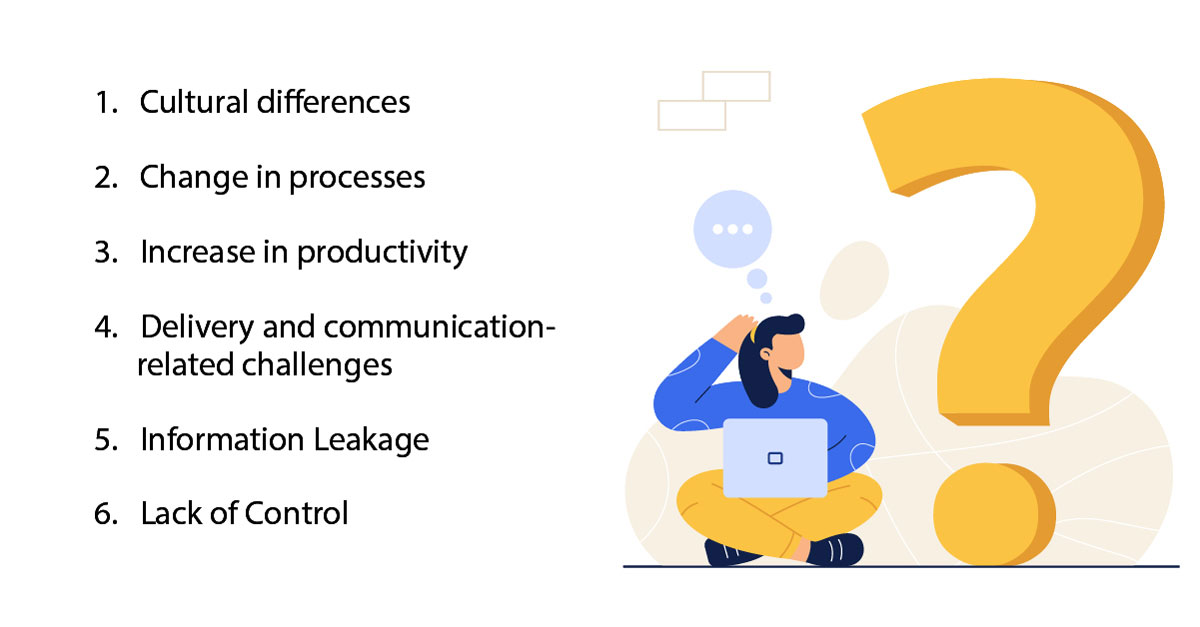
#1. Cultural Differences
Let's consider a company based in the United States. They have outsourced app development to a company in India. They are not just different geographically but also culturally. The two countries approach problems differently. Their value systems, hierarchies, and empowerment strategies are different.
Can this impact the way we collaborate or make decisions? Absolutely, the process may involve several people with different thoughts and ideas and can become a lengthy timeline and process for a single change to be done. These cultural differences can impact your development timeline and outcomes.
To Overcome This: Before finalizing your outsourcing partner, take time to understand their cultural norms and communication styles. Ask how they handle feedback, decision-making, and collaboration. Discuss how cultural differences might affect workflows, and clarify expectations early.
Consider starting with a small pilot project to test compatibility and communication before committing to a full-scale engagement. This proactive approach helps build mutual understanding and ensures a smoother, more effective partnership.
For a deeper understanding of how geography and collaboration models influence outsourcing success, explore our guide on Nearshore vs. Offshore Development.
#2. Change in Processes
When you outsource to an app development company, your existing internal processes may not align with theirs. For example, your team might follow a specific method for app development, delivery and deployment, while the outsourcing partner may have a different workflow.
Process Mismatch Impact: This alignment gap can lead to frequent back-and-forth communication, delays in decision-making, and extended project timelines and cost.
To overcome this: Establish a clear, collaborative process with the outsourcing partner from the start. Align on workflows, responsibilities, communication frequency, and tools. Document everything and make sure both sides are comfortable with the process before development begins. A well-defined, mutually agreed process will reduce friction, ensure smoother collaboration, and help accelerate delivery.
#3. Organizational Acceptance
Outsourcing often introduces changes to existing processes, workflows, and internal roles, which can create friction within your organization. These changes may require teams to adjust how they communicate, collaborate, or make decisions. The internal responsibilities and communication can overlap with the outsourced team which can lead to confusion, inefficiencies, and project delays.
To overcome this: Ensure internal alignment before initiating the outsourcing process. Avoid involving entire teams unnecessarily, instead, identify key individuals who will communicate and connect directly with the outsourcing partner. This focused approach helps streamline collaboration, reduces complexity, and ensures fewer delays, faster acceptance, and better work across both internal and external teams.
#4. Delivery and Communication-Related Challenges
Delivery and communication-related challenges are common when working across different time zones. When your workday ends, the outsourced team's day may just be starting, leaving little to no overlapping time. How does this time gap affect project flow? It can cause delays in feedback, decision-making, and deliveries. For example, when you're available to share updates or respond to changes, the other team might be offline, leading to stalled progress.
To overcome this: Set up a structured process that uses the time zone difference to your advantage. Share your feedback and updates before your day ends so the outsourcing team can work on them during their hours. This allows progress to continue even when your team is offline.
Additionally, establish at least one to two hours of overlapping time each day for live communication, alignment, and quick issue resolution. This small window can significantly improve collaboration and reduce delays.
For more details on offshore team communication-related challenges, read this article: Work Effectively with Offshore Teams
#5. Information Leakage
When outsourcing mobile app development, you'll need to share sensitive business data such as customer details, user credentials, or even patient records, depending on your app's purpose. This data must be handled in full compliance with regulations like Privacy Policy, GDPR, HIPAA, or other relevant standards.
What happens if their security standards don't match yours? It can expose your business to compliance violations, data breaches, and reputational risk. Working with an offshore team introduces these risks if their data protection measures aren't transparent or robust. You may not have visibility into how they store, access, or use the information.
To overcome this: Always verify the company's security protocols, data handling practices, privacy policy and compliance certifications. Sign a Non-Disclosure Agreement (NDA) and ensure that access to sensitive data is restricted to only essential personnel. You should also check if they offer data encryption, secure file transfer methods, and internal audit trails to track usage. Taking these steps minimizes the risk of leaks and builds trust in the partnership.
#6. Lack of Control
When you outsource app development, you may not have full visibility into the daily workflow or direct control over the development team. Since the work happens externally, it can be difficult to track real-time progress, assess productivity, or know where things stand, especially without a structured update process.
How does this limited visibility affect the overall project? It can lead to uncertainty about timelines, unresolved issues, or misaligned expectations. Over time, this can slow down delivery, impact quality, and create friction between teams due to unclear ownership or progress tracking.
To overcome this: establish a clear communication structure from the start. Request regular updates through progress reports, stand-up meetings, or sprint reviews. Implement weekly or bi-weekly sprints to review completed tasks, identify blockers, and align priorities.
You can also ask the team to share screen recordings of the work done to visually track progress. Additionally, using project management tools like Jira, Trello, or Asana can improve transparency and keep everyone aligned.
How to Prepare for Outsourcing App Development?
Outsourcing app development to a company in another country requires thoughtful planning and clear coordination. You'll need well-defined processes, aligned expectations, and a reliable communication plan between your team and the offshore partner.
This section covers the key steps to prepare for successful outsourcing.
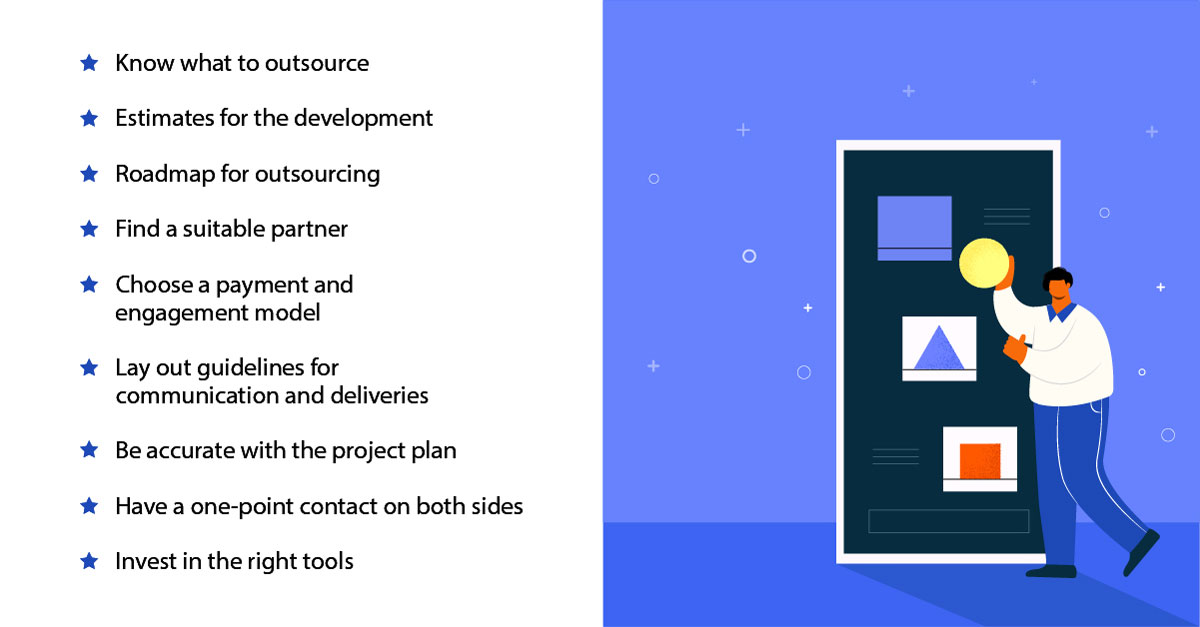
#1. Know What to Outsource?
You don't always need to outsource the entire app development process. Many companies choose to build certain parts internally, such as backend systems, UI/UX design, or one of the platforms (iOS or Android), while outsourcing the rest. For example, some businesses develop the iOS app in-house but outsource the Android version, or vice versa.
So, how do you ensure both sides stay in sync? Before approaching an outsourcing partner, clearly define which parts of the project will remain internal and which will be outsourced. Prepare a list of responsibilities, deliverables, and expectations for the outsourced team. Communicate this scope during initial discussions and align on timelines, milestones, and ownership. Creating an internal chart or roadmap outlining the outsourced team's role in the broader development process can help streamline coordination and reduce confusion later.
#2. Estimates for the Development
Estimating timelines and budgets early is essential to avoid overspending, manage resources effectively, and align expectations with your outsourcing partner. But how can I make sure my time and cost estimates are accurate? Use historical data from similar past projects or credible benchmarks to create realistic projections. If such data isn't available, consult experts to estimate key phases like design, development, and testing.
Factor in modern trends like AI features, image recognition, or plugin integrations, which may add complexity and cost. Regularly revisit your estimates as the project evolves, and include a contingency buffer of 10-20% to handle unforeseen challenges and ensure smoother execution.
#3. Roadmap for Outsourcing
Without proper preparation, outsourcing can become complex and time-consuming. Your preparedness is reflected in how you plan and manage the entire process. You've already identified what needs to be outsourced. Now it's important to determine how you will go about outsourcing it effectively.
- Prepare a blueprint that outlines timelines, responsibilities, and the number of days needed for knowledge transfer.
- Hold internal discussions to identify everything the development team will need for efficient and functional delivery.
- Plan the documentation to be shared, include scope, workflows, deliverables, and communication expectations.
- Ensure legal readiness, review NDAs, contracts, and any other required agreements before engagement.
- Assign key team members who will handle communication and coordination with the offshore partner.
- Once everything is in place, execute the plan based on your defined blueprint.
#4. Find a Suitable Partner
Selecting the right outsourcing partner is one of the most important decisions in your app development journey. The right team will not only deliver quality but also ensure smooth collaboration and timely execution.
- Choose a partner with strong technical expertise, proven experience, and effective collaboration skills.
- Look for a team that follows structured methodologies like Agile or DevOps for predictable and efficient development.
- Ensure they stay updated with the latest technologies and adapt to changing industry trends.
- The partner should take full ownership of the project and provide clear, organized documentation throughout the process.
- Opt for phased delivery to track progress, gather feedback, and reduce risks.
- Flexibility in contract terms is important, your partner should be open to scaling or extending support as needed.
- Make sure they integrate testing early and consistently to enable faster, more reliable app releases.
- Prioritize partners who understand secure data practices and can work seamlessly with distributed or remote teams.
#5. Choose a Payment and Engagement Model
Once your budget is set, the next step is to finalize the payment terms and engagement model with your outsourcing partner. This conversation ensures transparency and avoids confusion during development.
- Define payment milestones clearly and agree on accepted payment methods in advance.
- Decide whether you'll hire a dedicated team, go with hourly billing, or use a fixed-cost project model.
- Align on how invoices, progress tracking, and payment approvals will be handled.
- Confirm whether you’ll need the flexibility to scale the team as the project evolves.
- Finalize these details early to avoid delays or miscommunication during the development phase.
#6. Layout Guidelines for Communication and Deliveries
Clear communication and aligned delivery expectations are key to successful outsourcing. Misunderstandings or timeline mismatches often arise when communication is not structured from the beginning.
- Define a communication model with agreed channels (e.g., Slack, email, project management tools) and meeting schedules.
- Set expectations for response times, feedback cycles, and reporting formats.
- Discuss delivery timelines with the offshore team and ensure they align with your internal milestones.
- Account for cultural differences and work habits, agree on how updates, blockers, and decisions will be communicated.
- Document all processes so that both teams stay on the same page throughout the project.
#7. Have a One-Point Contact on Both Sides
Involving the full team in every sprint or communication loop can lead to confusion and inefficiency. To streamline coordination, assign a single point of contact from both your team and the outsourcing partner.
- Identify these individuals early, during the project scoping and timeline discussions.
- Ensure they have clarity on their roles and the authority to make or relay key decisions.
- Set up an escalation path in case they're unavailable.
- Use a centralized communication or task management tool to maintain visibility for all stakeholders.
- This approach improves clarity, reduces delays, and helps keep the project on track.
#8. Invest in the Right Tools
For this purpose, you need tools that help you communicate and collaborate effectively. Investing in project management tools, software solutions, and even real-time messenger tools can help you manage the processes smoothly with greater efficiency.
- When working with a remote or outsourced team, having the right tools in place is crucial for smooth collaboration and productivity.
- You should aim to over-communicate your goals, expectations, and progress, this helps eliminate confusion and ensures alignment.
- Use project management tools (like Jira, Trello, or ClickUp) to track tasks, timelines, and ownership.
- Implement real-time communication tools (like Slack, Microsoft Teams, or Zoom) for quick updates and daily check-ins.
- Consider using documentation platforms (like Notion or Confluence) to centralize information, workflows, and decisions.
- The right tool stack can streamline collaboration, boost accountability, and reduce delays in a distributed work setup.
“Mobile apps have become crucial for business growth, helping companies increase ROI, customer engagement, streamline operations, and boost revenue.”
Conclusion
Outsourcing your mobile app development can significantly speed up delivery and reduce internal workload, but only if you're well-prepared. Taking the time to plan your project helps you identify what to outsource, set clear expectations, and establish smooth communication with your development partner.
When you are planning for outsourcing, you should take cultural differences into consideration:
- Streamline the processes and identify the way to collaborate
- Create the guidelines for communication and deliveries
- Manage the points of contact
- Invest in the right tools and technologies
Your search ends here with Expert App Devs. Our team of experienced and skilled developers offers robust and capable app solutions. We can collaborate with you to develop an end-to-end or a partial solution. If you want to talk about an idea you are excited about, connect with our team by filling out this contact form.
Most Common and Frequently Asked Questions
#1. Is It Cheaper To Outsource App Development?
Yes, outsourcing is generally more cost-effective than hiring an in-house team. You save on:
- Salaries and benefits of full-time employees
- Infrastructure and equipment costs
- Training and onboarding expenses
You also get access to global talent at competitive rates, especially from regions like Eastern Europe, South Asia, or Latin America.
#2. What are the Main Benefit of Mobile Application Outsourcing?
The biggest advantage is gaining access to skilled talent without the overhead. Outsourcing lets you work with experienced app developers who understand the latest technologies and industry trends, without hiring them full-time.
Additional benefits include:
- Faster project delivery thanks to established workflows
- Flexible scaling based on your project needs
- Reduced risk with expert teams who’ve done it before
- More time to focus on your core business while development is handled externally
In short, outsourcing gives you expertise, speed, and cost-efficiency, all in one package.
#3. How to Check Outsource App Developer Expertise?
Use this quick checklist:
- Portfolio & Case Studies - Review previous work and industries served
- Client Testimonials & Reviews - Look on platforms like Clutch, GoodFirms, or LinkedIn
- Tech Stack & Certifications - Ensure alignment with your project’s requirements
- Trial Task or MVP - Start small to evaluate technical and communication skills
- Interview Their Team - Assess their problem-solving approach and domain knowledge
Frequently Asked Questions By Startup Founders
#1. Should I Get an NDA Before I Share My App Idea?
An NDA isn’t always necessary at the start, especially for high-level discussions. Reputable firms like Expert App Devs rely on trust and long-term relationships, not stealing ideas. If you're sharing sensitive logic or strategy, it’s smart to use an NDA, but for basic discussions, it's usually safe without one.
#2. How Much Should I Expect to Spend on a Mobile App?
Mobile app development costs vary widely based on complexity, platform (iOS, Android, or both), and features. Here’s a rough range:
- Simple MVP: $5,000 to $15,000
- Medium Complexity App: $15,000 to $40,000
- High-End App (e.g., Uber-like): $40,000 to $80,000+
Ongoing costs for updates, hosting, maintenance,and scaling should also be factored in.
#3. What’s the Best Country to Outsource Mobile App Development to?
India is one of the most popular and reliable destinations for outsourcing mobile app development. It offers a large pool of skilled developers, cost-effective rates, strong English proficiency, and companies like Expert App Devs known for delivering 2500+ apps and served over 600+ clients.
Other good options include:
- Poland & Ukraine: Strong technical expertise, good time zone for Europe
- Vietnam & Philippines: Affordable and growing tech scene
- Latin America (e.g., Mexico, Argentina): Nearshore benefits for U.S. startups
However, for the best mix of talent, price, communication, and scalability, India remains a top choice.
#4. Can I Update or Change Features During Development?
Yes and you should, as real user feedback and testing often lead to feature refinement. Agile development allows for flexibility, but frequent changes can impact timelines and budgets. Discuss a change management process with your development partner to handle scope updates smoothly.
#5. Can I Outsource Just the MVP Version of My App?
Absolutely. Many startups begin by outsourcing just the MVP (Minimum Viable Product) to validate their idea quickly and affordably. Once validated, you can decide whether to continue outsourcing or build an in-house team. Just ensure your MVP is scalable and well-documented for future development.
Frequently Asked Questions by Small Business Owners
#1. Will an App Really Help Grow My Small Business?
Yes, a mobile app can increase customer engagement, boost sales, and improve brand visibility. Whether it’s for online ordering, bookings, loyalty programs, or customer support, an app helps you stay connected with your audience, directly on their phones. It’s especially impactful if your competitors don’t have one yet.
#2. How Much Will It Cost to Build a Simple Business App?
A basic business app (like appointment booking, product catalog, or loyalty program) typically costs between $5,000 to $20,000, depending on features, platforms (iOS/Android), and design. Outsourcing to companies like Expert App Devs (EAD) can help you get quality results within a small business budget.
#3. What Questions Should I Ask a Developer Before Hiring Them?
Asking the right questions upfront helps you avoid surprises and choose a developer who aligns with your business goals.
- Can you show examples of similar apps you’ve built?
- What’s your development process like?
- How do you handle updates and maintenance?
- What’s included in the cost , design, testing, support?
- How will we communicate and track progress?
These questions help ensure you're hiring a transparent, experienced, and reliable team.
#4. Do I Need to Understand Tech to Outsource an App?
Not at all. A good development partner will guide you through the process in plain language. You just need a clear vision of what your app should do. Our Developers and Project Managers specialize in working with non-technical founders and business owners, turning your ideas into functional apps without tech confusion.
Frequently Asked Questions By SaaS or Enterprise Business Owners and Managers
#1. Can I Outsource Just One Part of the App (like UI or Backend)?
Yes, many product teams outsource specific components like frontend, backend, or testing. This modular approach allows you to scale faster, fill internal skill gaps, and retain control over the rest of the product.
#2. Will Outsourced Developers Follow our Tech Stack and Standards?
Absolutely, as long as expectations are clearly communicated. Our skilled and experienced development team will align with your tech stack, architecture preferences, coding standards, and review processes to ensure seamless integration with your internal team.
#3. Should I Choose Fixed-Price Contracts or Hourly Billing for Outsourcing?
It depends on your project structure.
- Choose fixed-price for short-term projects with clearly defined requirements and minimal expected changes.
- Opt for hourly billing if your product roadmap is evolving, or if you prefer agile development with continuous iteration.
- Hourly or time & material models are often better suited for SaaS or enterprise businesses that need flexibility and ongoing collaboration.
#4. Who Owns the Intellectual Property Rights of the Outsourced App?
Ownership of the intellectual property (IP) should always remain with you, the client. This must be explicitly outlined in your contract. Trusted outsourcing companies like us, Expert App Devs, ensure full IP rights are transferred to you upon project completion or according to the agreed milestones.





 154
154

 0
0


 148
0
148
0
 138
0
138
0
 110
0
110
0